October 21, 2026Review
GL.iNet Comet Pro Teardown: What $180 of IP KVM Looks Like Inside
We opened the most feature-dense budget KVM: the camera-chip lineage, the thermal design that lets 4K@30 run silent, and where the money went.
By Andrew Douglass · Founder
Disclosure: Our articles contain affiliate links, including Amazon. If you buy through one, we may earn a commission at no extra cost to you, and as an Amazon Associate we earn from qualifying purchases. It never affects our testing, measurements, or verdicts. Full disclosure.
This GL.iNet Comet Pro teardown answers the question its spec sheet raises: how does a $179.99 device fit 4K@30 capture, 4K passthrough, Wi-Fi 6, a touchscreen, and 32GB of storage into a palm-size box without a fan? We opened our GL-RM10 to find out. The answer, in one line: camera-industry silicon, a deliberate thermal design, and a company that has been packaging Rockchip chips into small network boxes for a decade.
Hardware overview
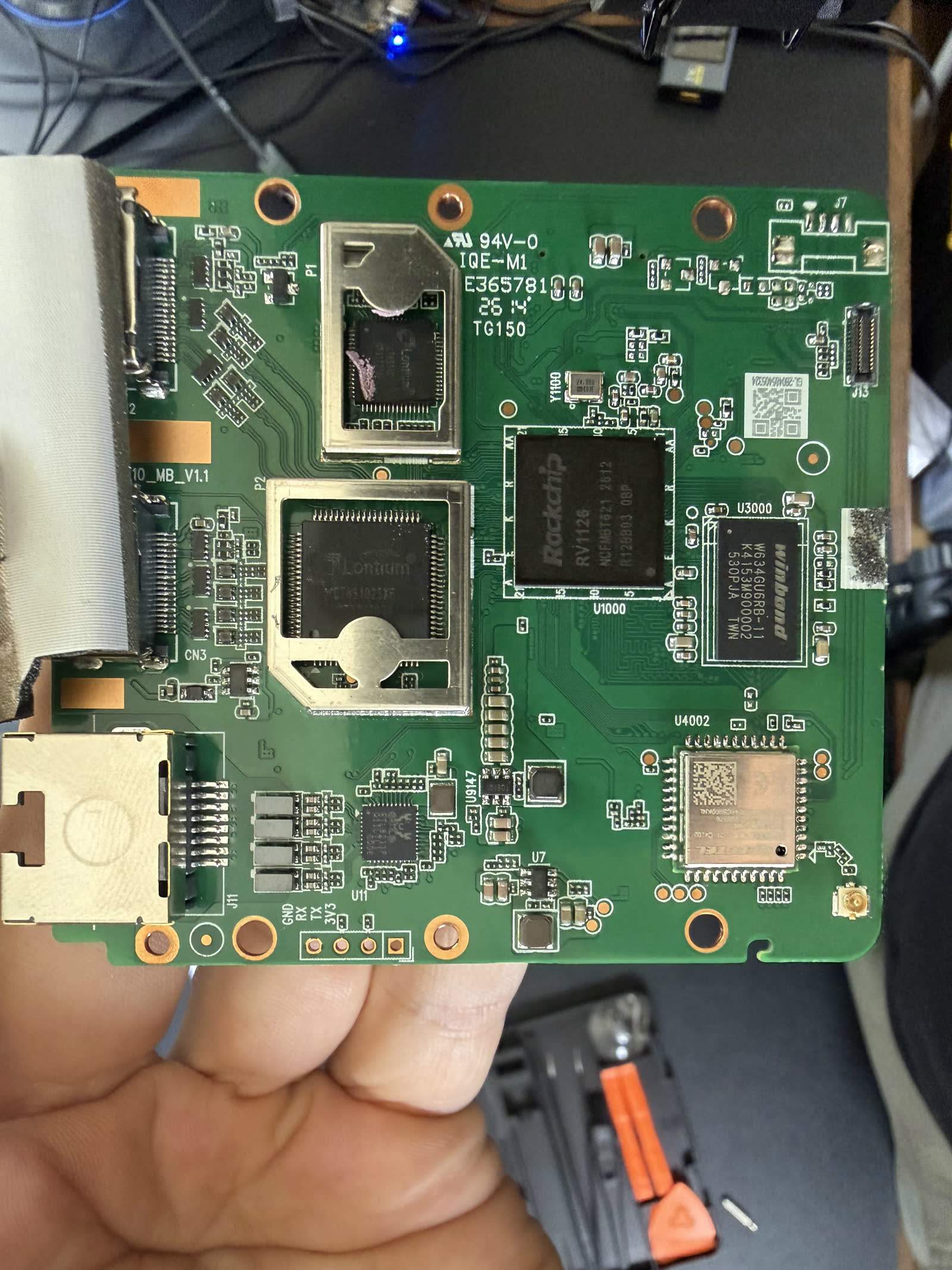
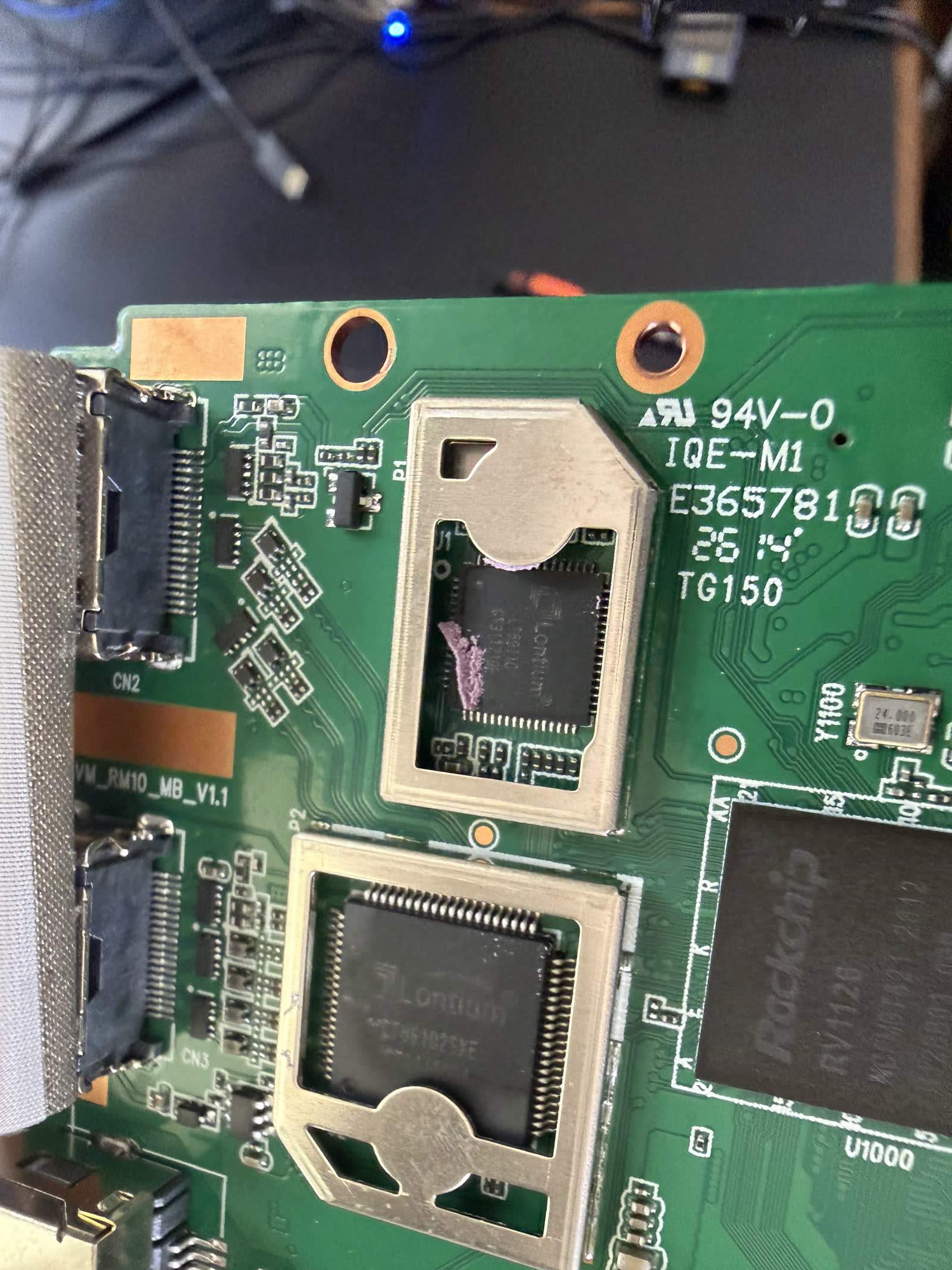
The Comet Pro is GL.iNet's flagship remote KVM: quad-core Cortex-A53 at 1.5GHz, 1GB DDR3L, 32GB eMMC, dual HDMI (input plus passthrough output), gigabit Ethernet, Wi-Fi 6, USB-C power and data, USB-A, and the 2.22-inch touchscreen, per GL.iNet's published specifications. What the spec sheet does not say is which SoC: GL.iNet has never formally named the part, and the community's best-supported answer is Rockchip's RV1126B, the Cortex-A53 successor to the RV1126 that CNX Software's teardown confirmed in the base Comet. The lineage matters more than the part number, and the lineage is camera chips.
Design and build quality
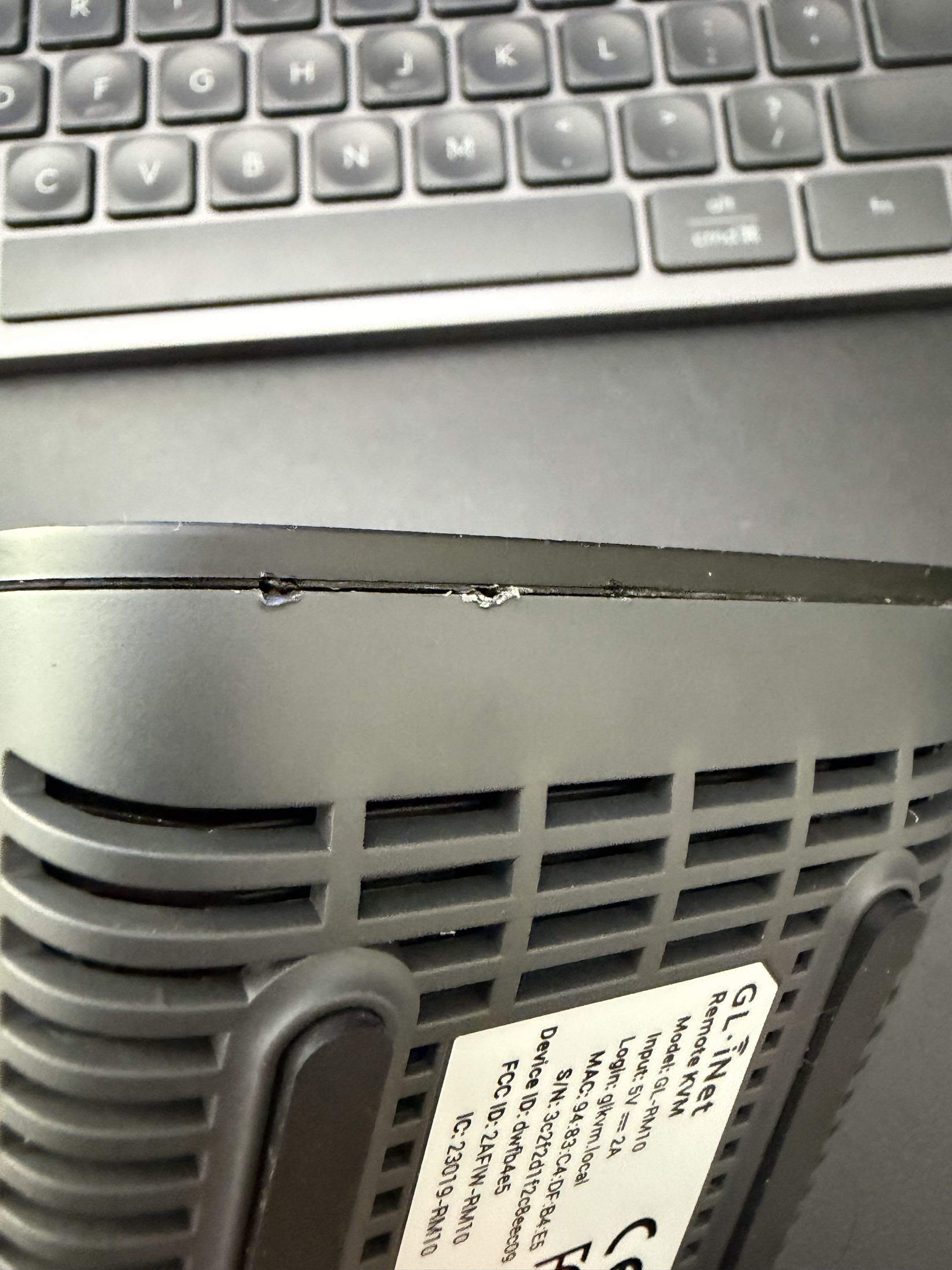
The shell is glass-fiber-reinforced plastic over a metal internal frame that doubles as the heatsink, with the touchscreen module occupying the top face and antennas along the edges. Screws rather than clips hold it together, seams are tight, and disassembly is orderly if not sanctioned the way Sipeed documents for the NanoKVM. It reads as a proper consumer product where the NanoKVM reads as a dev board in a case; the difference in mechanical BOM is visible everywhere and explains a chunk of the price gap.
Internal hardware and specifications
| Component | What we found | Why it matters |
|---|---|---|
| SoC | Quad Cortex-A53 @ 1.5GHz (community consensus: Rockchip RV1126B) | Camera-class chip: hardware H.264 encode, MIPI CSI video pipeline |
| Memory | 1GB DDR3L | Comfortable for encode buffers and the app stack |
| Storage | 32GB eMMC, soldered | ISO library for virtual media, recordings, firmware headroom |
| Capture path | HDMI-to-MIPI CSI bridge into the SoC | Same architecture as the base Comet and NanoKVM |
| Passthrough path | HDMI splitter stage feeding bridge + output jack | The desk monitor keeps working while capture runs |
| Wireless | Wi-Fi 6 module + Bluetooth, edge antennas | The category's only wireless-first flagship |
| Cooling | Metal frame as heatsink, thermal pads, no fan | Sustains 4K@30 encode silently |
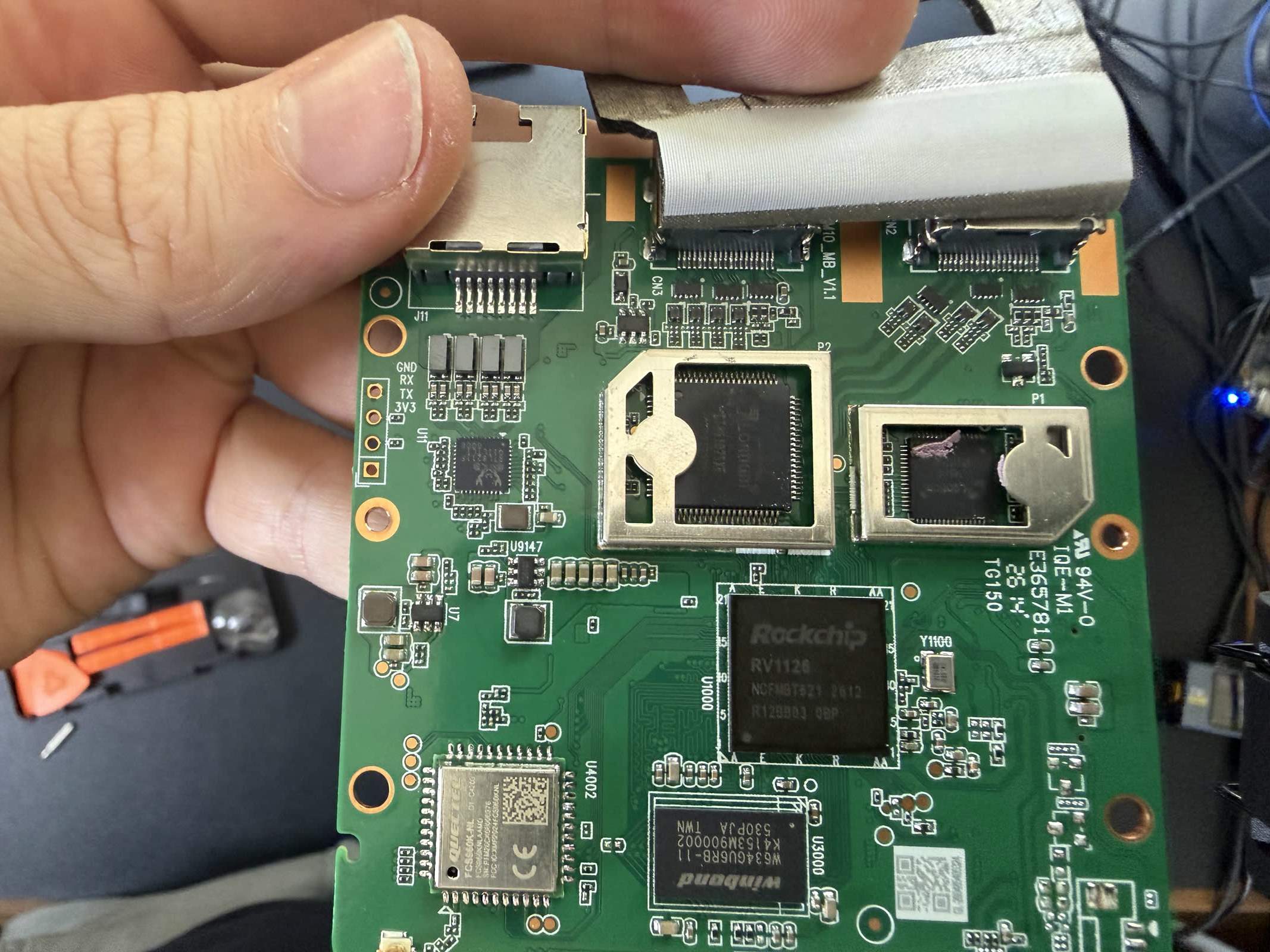
The board layout is dense and tidy, with the RF section properly shielded and the power stages placed away from the radio. Nothing about it looks improvised; this is a company that ships travel routers by the million applying the same playbook to a new category.
Ports and connections, traced
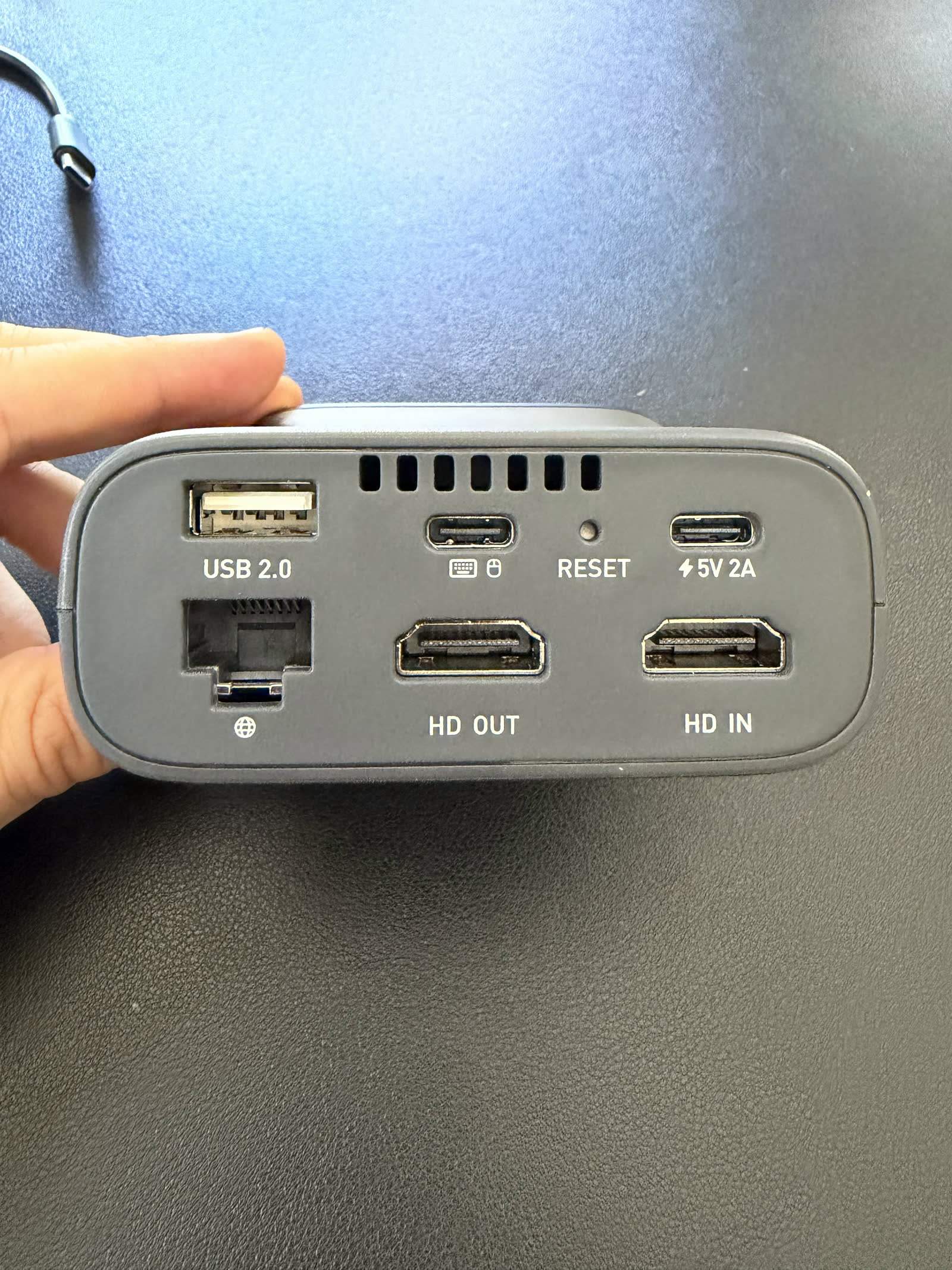
Following the traces clarifies the architecture. The HDMI input hits a splitter stage: one leg exits as the passthrough output jack, the other feeds the HDMI-to-CSI bridge into the SoC's camera pipeline, which is why passthrough is latency-free (it never touches the encoder). USB-C carries power in and the HID/data link to the host; the USB-A port hangs off the SoC for peripherals and storage. Gigabit Ethernet and the Wi-Fi module share the network stack. It is the base Comet's architecture with one more HDMI leg and a radio, executed on a faster chip.
Touchscreen display module
The 2.22-inch touchscreen is a standard MIPI DSI module on a ribbon, mounted to the top shell and driven directly by the SoC. From a teardown perspective it is the cheapest impressive feature in the box: a few dollars of panel that delivers the product's most memorable interaction (IP address and status at a glance, quick actions on device). Repairability note: the ribbon and connector are serviceable, the panel is glued to the shell.
4K video passthrough and the thermal design
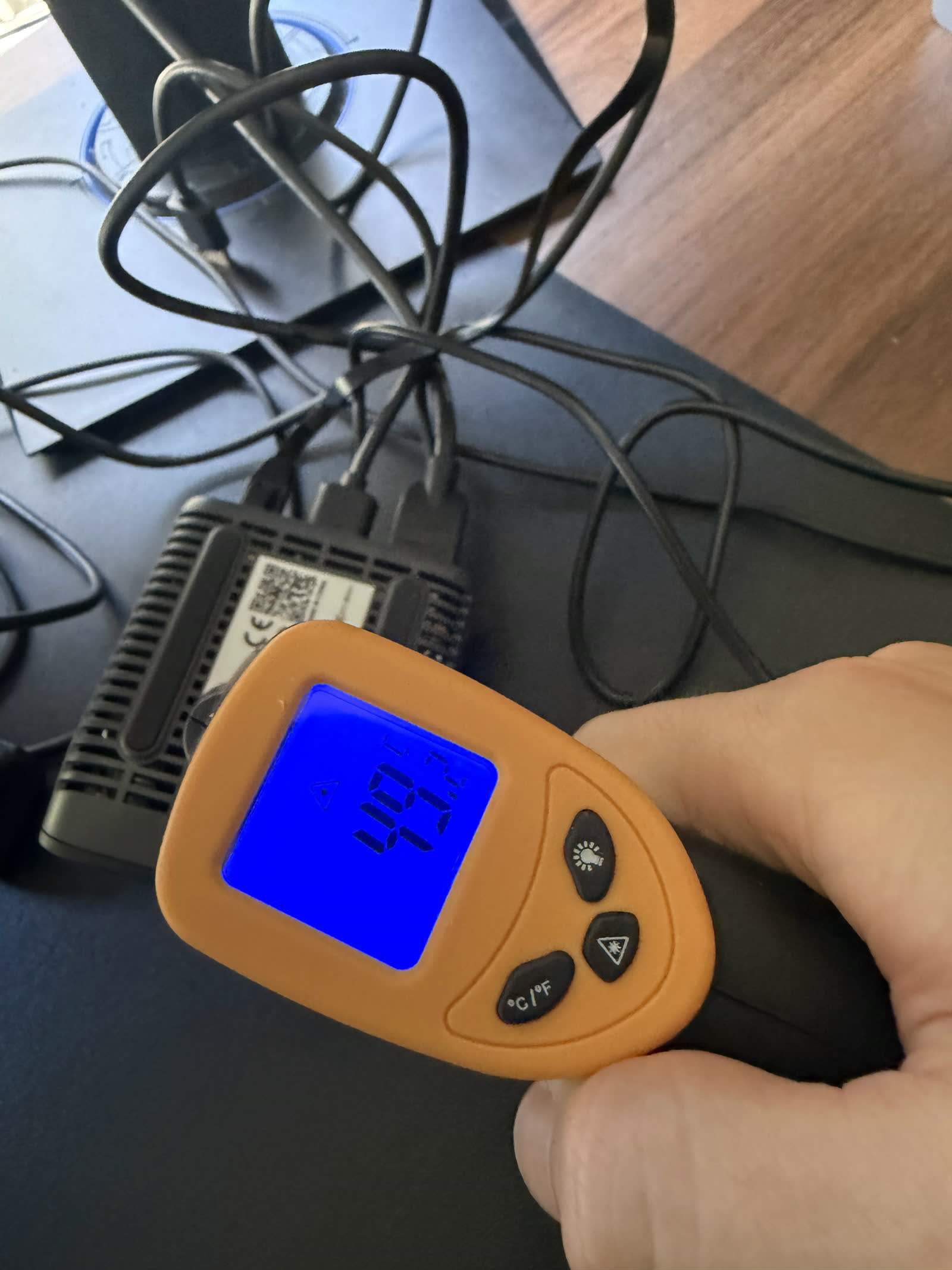
The teardown's best engineering story. Sustained 4K@30 H.264 encode is a continuous thermal load, and the Comet Pro handles it fanless: the SoC couples through thermal pads to the internal metal frame, which spreads heat across the whole enclosure footprint. In our sustained streaming sessions the shell reaches warm-not-hot equilibrium with no throttling we could detect. This is the difference between a chip that can encode 4K@30 and a product that does it all day, and it is exactly the discipline the 4K@60 generation will need four times as much of.
Wi-Fi 6 connectivity
The radio rides a shielded module with antennas placed along the shell edges, away from the noisy power and HDMI sections. In practice we measured no meaningful latency penalty for Wi-Fi 6 sessions against Ethernet on a clean network, which tracks the RF layout care visible inside. The wireless option remains the Pro's most differentiating capability: no other flagship-tier KVM installs where no cable runs.
Audio features
Two-way audio is handled in the capture pipeline (HDMI audio in) with a return path to the host, a feature pair the base Comet and most competitors lack in full. No dedicated audio silicon of note inside; it is SoC work, which is the theme of the whole board.
Software, web interface, and what the eMMC carries
The 32GB eMMC holds the GLKVM stack: web UI, virtual media storage, recording space, and the update system. GL.iNet's own under-the-hood writeup is unusually candid about the architecture for a vendor blog. The software experience (fast UI, desktop/mobile apps, multi-device view) is covered in our full Comet review; from the hardware side, the relevant fact is headroom: this platform has CPU and storage to keep absorbing features, which GL.iNet's firmware cadence exploits monthly.
Remote access, Tailscale integration, and security
Tailscale runs on-device with room to spare, and the self-host option for the relay is a genuine differentiator for security-conscious buyers. The eMMC being soldered cuts both ways: no removable card to tamper with, no removable card to re-image; trust flows through GL.iNet's signed update channel. One independent reviewer's packet-capture analysis found the network behavior clean apart from standard update checks. Deployment posture stays non-negotiable regardless: isolated VLAN, overlay network, no port forwarding (full guide).
Virtual media and storage
The soldered 32GB eMMC gives virtual media a real home: a working library of installer ISOs lives on-device, mountable to the host as USB storage at speeds the gigabit network feeds comfortably. Against the NanoKVM's microSD-plus-100M-Ethernet arrangement, this is the premium-tier answer, and the teardown shows why it costs more.
ATX board and Fingerbot accessories
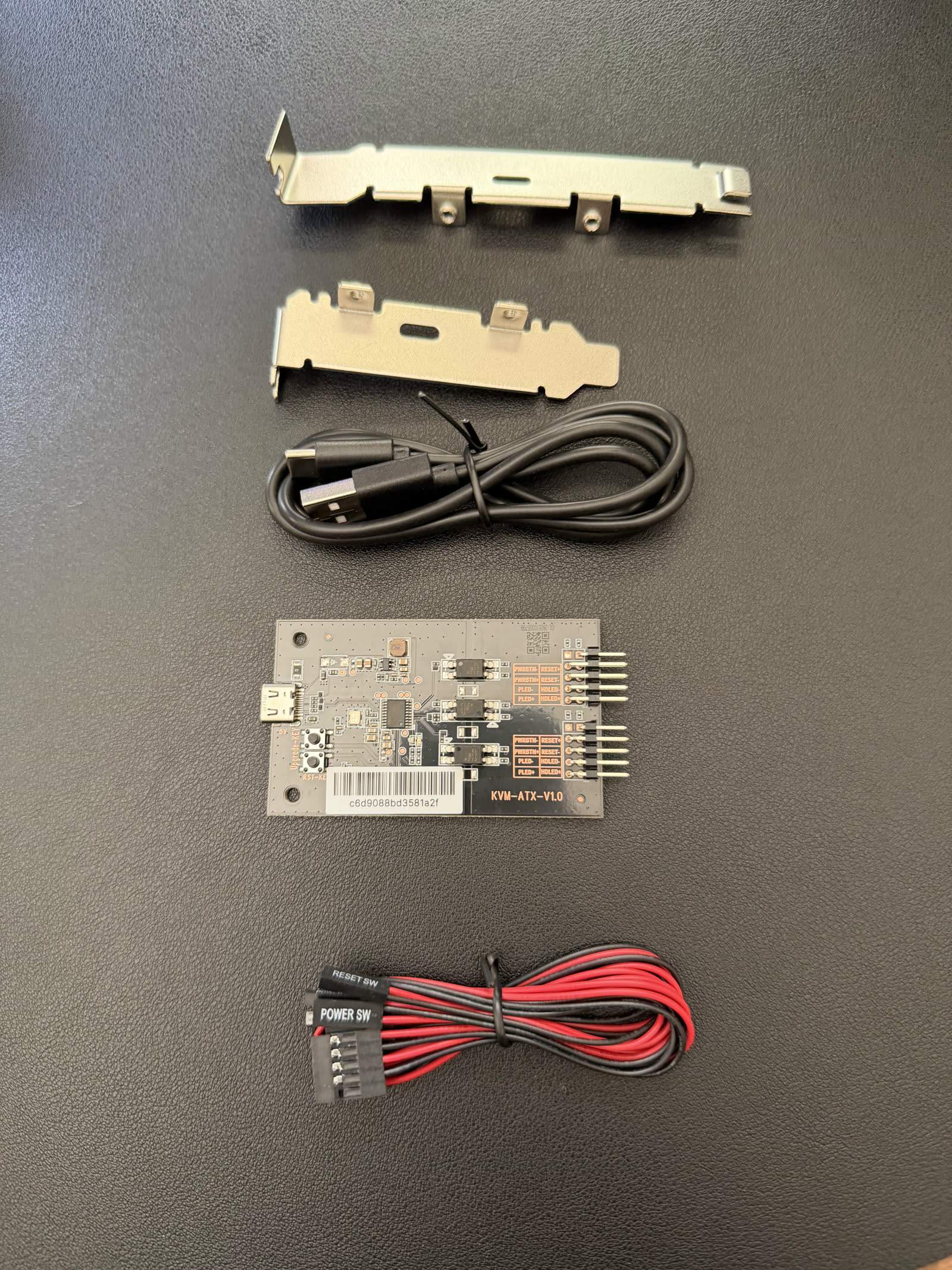
Neither accessory lives inside the main unit, but both belong in its hardware story. The GL-ATXPC board is an optocoupled front-panel-header controller in the same mold as PiKVM's and Sipeed's. The fingerbot is the outlier: a motorized plunger that physically presses power buttons on machines you cannot open, mechanically silly and situationally brilliant. Together they extend the Pro's out-of-band coverage to effectively any machine with a button.
Setup, installation, pricing and availability
Practical notes from reassembly: everything went back together without casualties, no warranty-void stickers were harmed (check your jurisdiction's mood on that), and the device booted clean. The Pro sells for $179.99 through GL.iNet's store and Amazon, alongside the Comet ($79 to $99.99), Comet PoE ($115.99), and the 5G variant; full buying context in the review.
Comparison with competitors, from the inside
Opened side by side with its rivals: the NanoKVM is a dev board economized into a product; the JetKVM is a purpose-built board polished into an object; the Comet Pro is a consumer-electronics platform play, the most conventional and the most complete of the three. The JetKVM head-to-head settles the buying question; from the teardown bench, GL.iNet's build is the one that looks most like a company planning to ship this category for years.
FAQ
FAQ
A quad-core Cortex-A53 at 1.5GHz that GL.iNet has not formally named; community analysis points to the Rockchip RV1126B, the A53 successor of the RV1126 confirmed in the base Comet. Both are camera-class chips with hardware H.264 encode and MIPI CSI video input.
The Pro moves from the RV1126 (quad A7) to a faster A53 platform, quadruples storage to 32GB eMMC, adds the HDMI passthrough splitter stage, a Wi-Fi 6/Bluetooth module, and the touchscreen, all on a metal-frame thermal design the base model does not need.
No. The SoC couples to an internal metal frame through thermal pads, spreading heat across the enclosure. It sustains 4K@30 encode silently at warm-not-hot temperatures in our testing.
Moderately: screwed assembly, serviceable ribbon connectors, and an orderly layout, but a glued screen and soldered eMMC. Easier to open than to meaningfully repair, which is typical for its class.
JetKVM wins on enclosure feel (metal and glass); the Comet Pro wins on internal engineering scope (thermal frame, RF integration, passthrough path). Both are properly designed products; the full comparison picks winners by use case.
Teardown verdict
Inside the Comet Pro is the most complete hardware execution in budget KVM: real thermal engineering, disciplined RF layout, a passthrough path done right, and storage that turns virtual media from a feature into a workflow. The camera-chip DNA it shares with the NanoKVM shows how the whole category gets built in 2026; the difference is that GL.iNet spent money on everything around the silicon. What no amount of packaging discipline changes is the encoder ceiling itself: 4K@30 is this chip's limit, and the 4K@60 problem is waiting for silicon this category has not shipped yet.