October 17, 2026Review
NanoKVM Teardown: Inside the $70 RISC-V KVM Over IP
We opened the cheapest IP KVM on the market: the dev board in a trench coat, the microphone nobody expected, and a BOM that explains the price.
By Andrew Douglass · Founder
Disclosure: Our articles contain affiliate links, including Amazon. If you buy through one, we may earn a commission at no extra cost to you, and as an Amazon Associate we earn from qualifying purchases. It never affects our testing, measurements, or verdicts. Full disclosure.
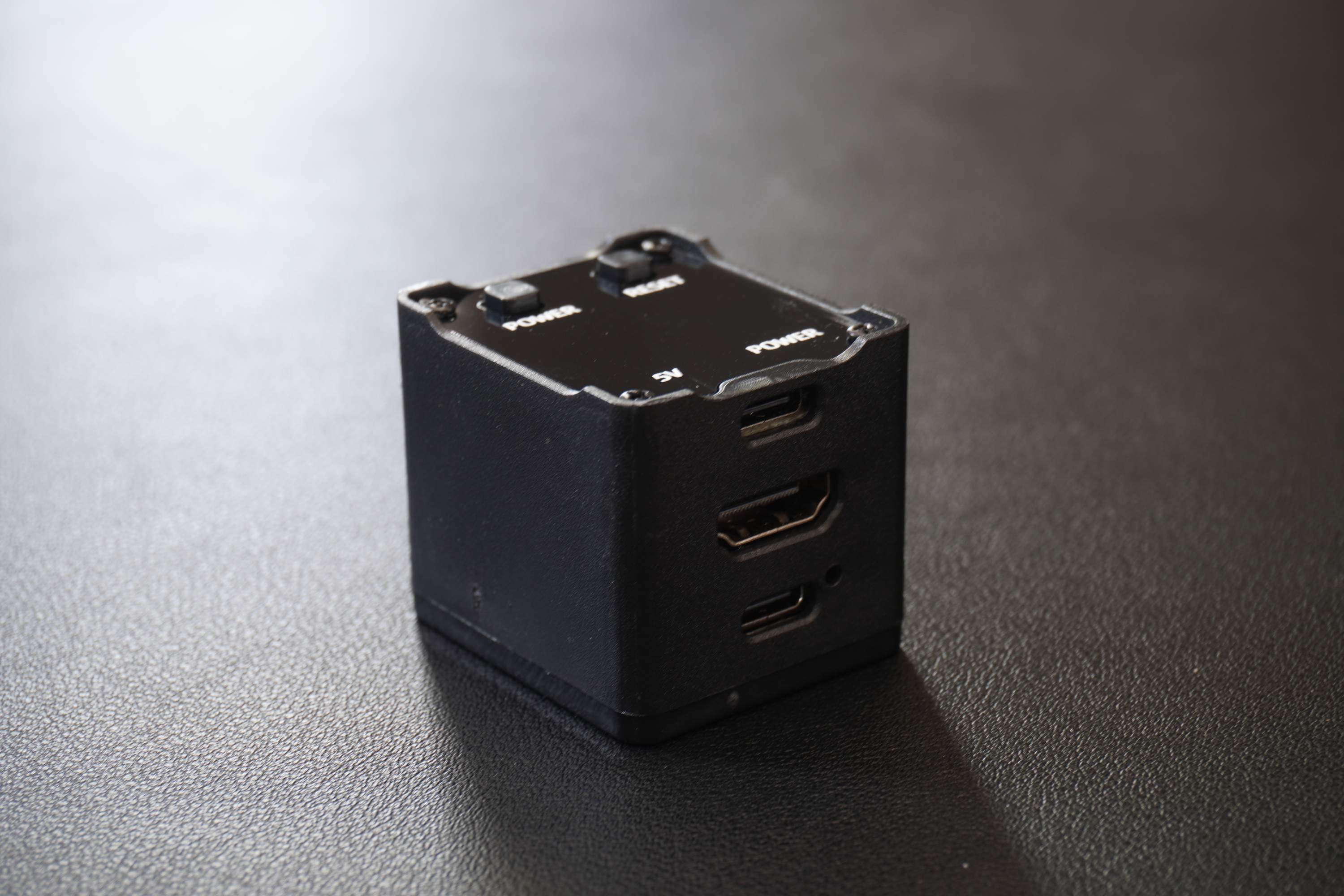
The NanoKVM teardown story writes itself once the case is open: Sipeed did not design a KVM from scratch, it dressed its LicheeRV Nano development board in a KVM costume, and every strength, quirk, and controversy of the product traces back to that decision. We disassembled our NanoKVM Full and PCIe units to see exactly what $55 to $87 buys, and what it inherits.
Hardware design and build quality
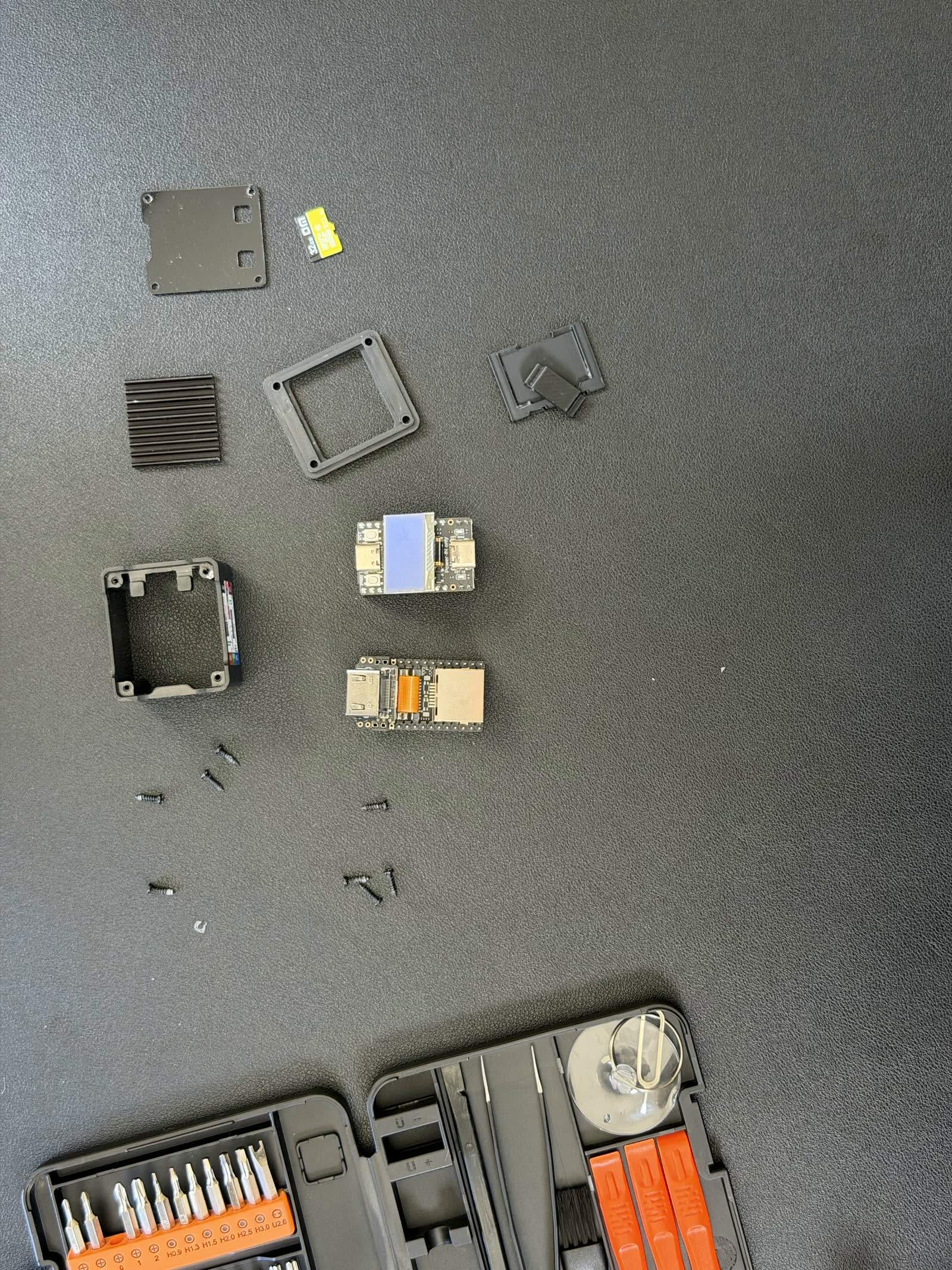
Sipeed officially sanctions disassembly (the user guide includes a disassembly section, which tells you who this product is for). The Full's shell is two pieces of lightweight injection-molded plastic around a stacked-board assembly: no gaskets, no thermal pads beyond the essentials, no screws where clips would do. It opens with a spudger in under a minute and reassembles without drama. Build quality verdict: exactly at its price, honest rather than impressive. Nothing inside suggests corners cut on the electronics; everything suggests a bill of materials trimmed to the bone on mechanicals.
RISC-V architecture: the SG2002 and its LicheeRV Nano heritage
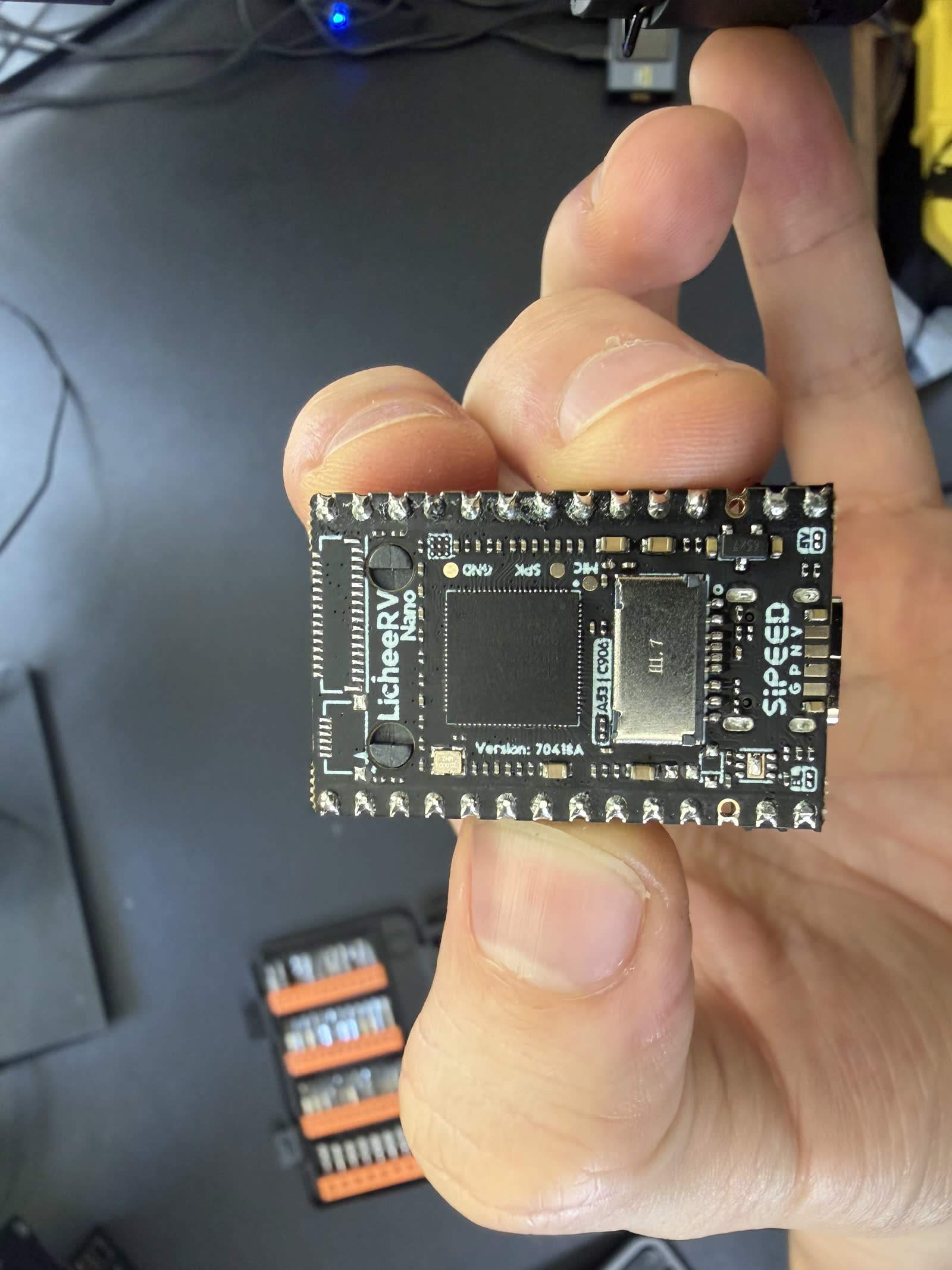
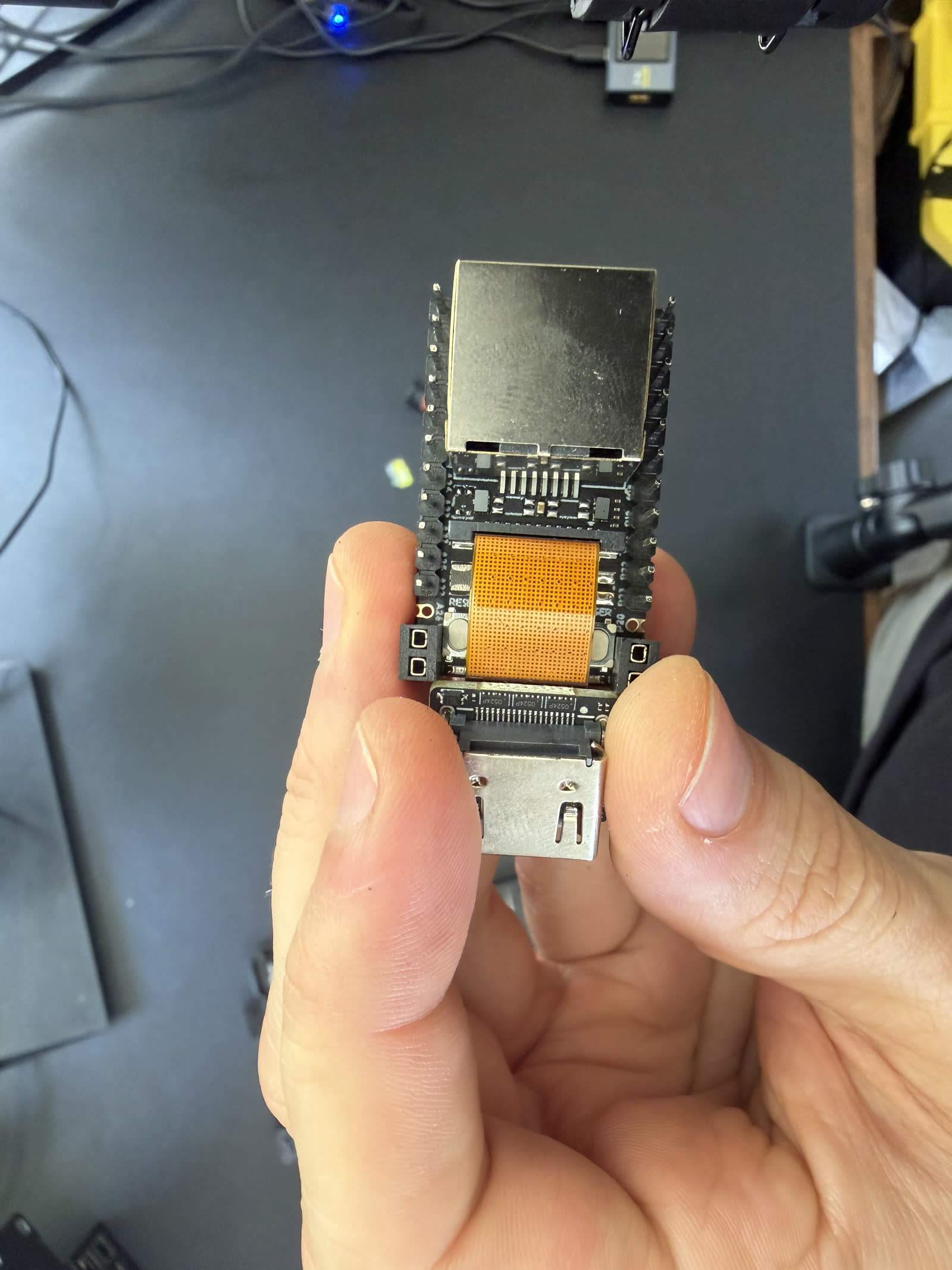
The main board is, functionally, a LicheeRV Nano: Sipeed's own RISC-V development board built around the SG2002, a SOPHGO chip with a 1GHz C906 RISC-V core (plus a second RISC-V core and a small NPU that the KVM firmware mostly ignores) and 256MB of DDR3 integrated in-package. This is the teardown's central fact. The SG2002 was designed for cheap vision products, which means it happens to carry exactly what a budget KVM needs: video input pipeline, H.264 encoder, USB device controller, Ethernet MAC. Sipeed had the board, the supply chain, and the firmware experience sitting in its dev-board business, and the NanoKVM is that inventory arbitraged into a product category. It is genuinely clever, and it is also why the device behaves like a dev board in places (SSH access, mDNS quirks, watchdog behavior documented in dev-board terms).
Ports and connectivity, board by board
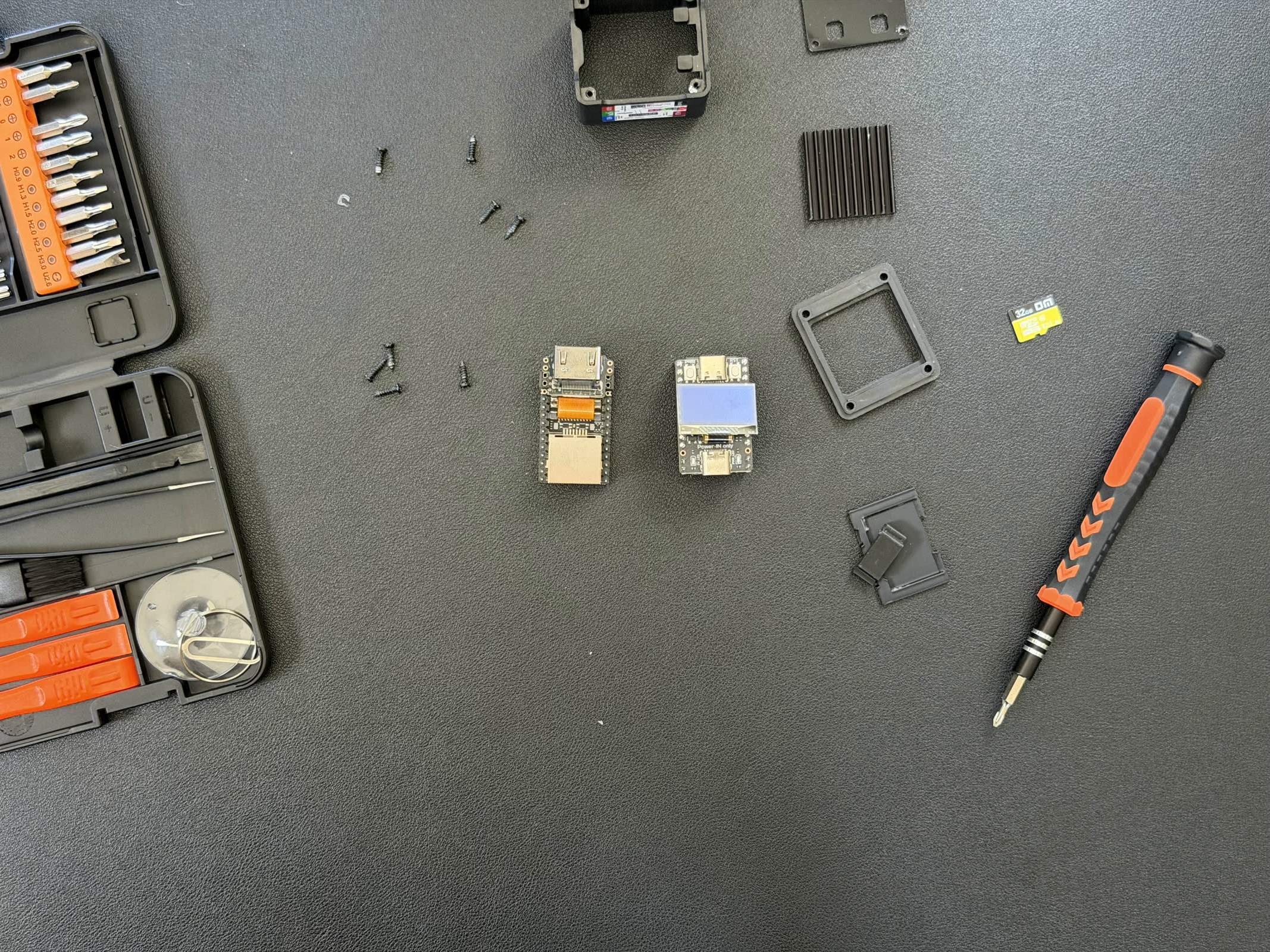
The stack: main SoC board, an HDMI bridge converting the HDMI input into the MIPI CSI format the SG2002's camera pipeline ingests (the same trick PiKVM uses on the Pi), and on the Full a small daughterboard carrying the OLED and front I/O. Around the edges: HDMI in, USB-C to the host (data plus power on one cable), 100M Ethernet, microSD. The 100M Ethernet port is the spec-sheet tell of the dev-board heritage; it caps virtual-media transfer speeds and is the single most consequential hardware limit we found inside.
The microphone: the teardown detail that became a scandal
Look closely at the main board and you find a populated MEMS microphone footprint, inherited directly from the LicheeRV Nano's vision-product design where a mic makes sense. On a device whose job is silent hardware access to your computers, it does not, and its discovery set off a small privacy storm (community videos titled around "the hidden microphone" did the rounds). The sober reading from the teardown bench: it is leftover dev-board DNA, not a surveillance feature, the firmware does not use it, and its existence was still a communications failure that fed the wider security controversy. Buyers who want certainty can remove it with a soldering iron in thirty seconds, which is its own kind of open-hardware answer.
Power consumption and options
Measured at the wall, our Full idles around 1.5W and never exceeded 3W under streaming load: trivial to power from the target's own USB port, which is the design intent (one USB-C cable carries HID data and power). There is no PoE anywhere in the original line (the NanoKVM Pro added it as an option), and no supercapacitor or RTC battery; the device simply reboots with power, in a few tens of seconds. Thermally the SG2002 runs warm to the touch through the plastic under sustained encode, with no throttling observed in hours of streaming; a metal case would have been nice and would have doubled the mechanical BOM.
OLED display and status indicators
The Full's tiny OLED (absent on the Lite) rides the daughterboard and earns its pennies: IP address, connection state, and stream status without opening a router page. It is the same class of display Sipeed puts on dev boards, driven over I2C, and it is one of the features that made competitors' status LEDs look lazy at twice the price.
ATX power control and front panel integration
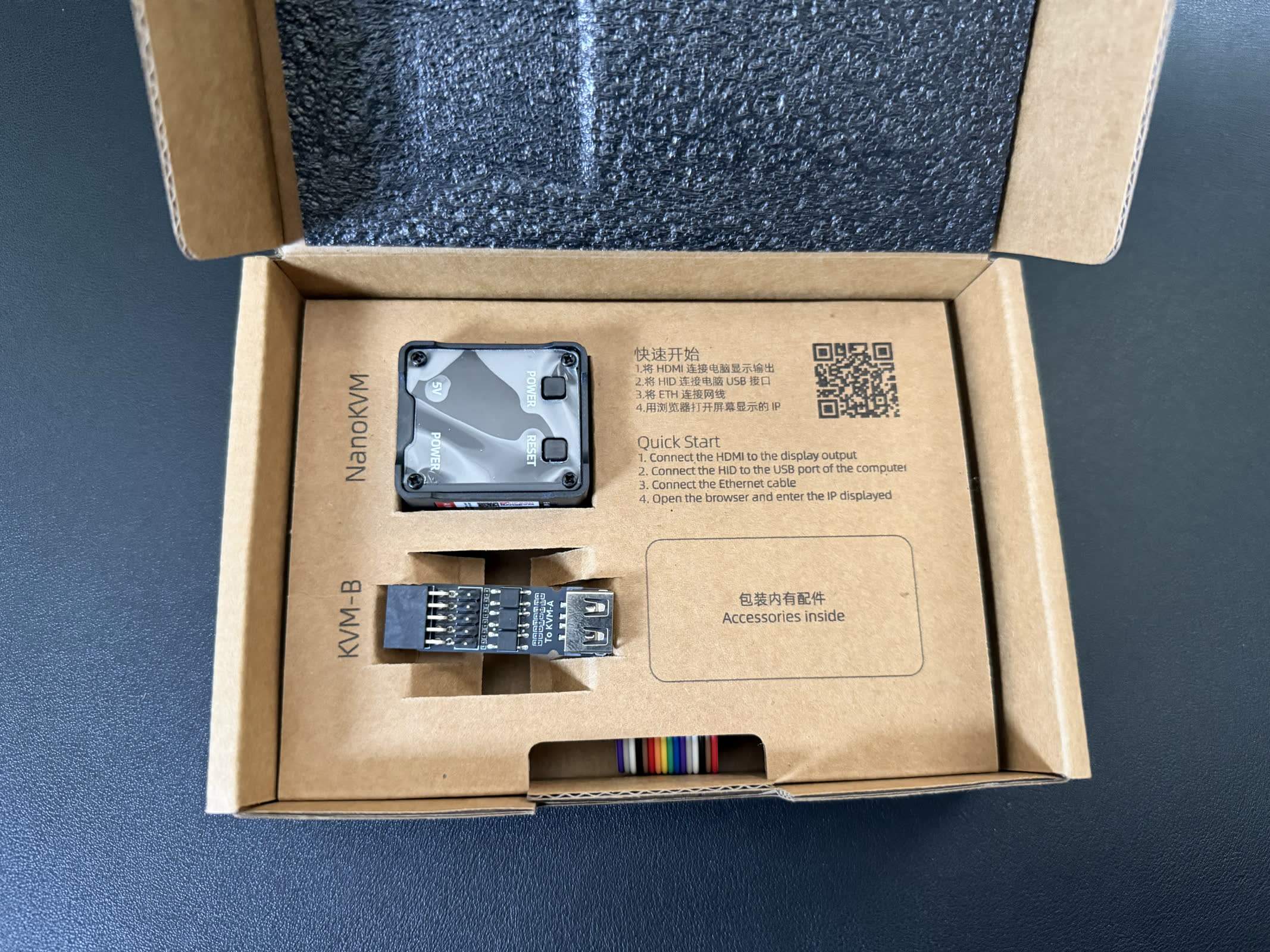
The bundled ATX board is its own small teardown pleasure: optocoupled switching for the motherboard's power and reset header lines plus sense lines for the power LED, connected to the main unit by a ribbon. Electrically simple, correctly isolated, and the reason a $55 device can hard-reset a crashed machine like enterprise gear. The PCIe variant does the same trick through the slot and a bracket, drawing standby power from the bus so it stays alive while the host sleeps: the single cleverest packaging idea in the category, with the caveat that its Ethernet still exits your case.
Pricing and value proposition: what the BOM says
Rough component math from the bench: the SG2002 with integrated memory is a low-single-digit-dollars part at volume; the HDMI bridge chip is likely the most expensive silicon on the board; plastics, OLED, microSD socket, and connectors round out a bill of materials plausibly under $25 for the Full. That is how a working IP KVM retails at $55 to $76 while a PiKVM V4 built on a $60-plus compute module cannot. The margin story also explains the software: firmware development is where the budget was not, which the early releases showed.
Web interface, virtual media, and the software the hardware carries
A teardown is incomplete without the software layer the boards exist to run. The SG2002 serves Sipeed's web UI: stream, virtual keyboard and mouse, ISO mounting as a virtual USB drive (constrained in practice by the 100M Ethernet), a web terminal, and serial terminal access. Application code is open on GitHub post-controversy. Feature-per-dollar remains absurd; polish per feature remains the tax.
RNDIS and USB networking
A dev-board feature worth its own note: the USB-C link to the host can present as an RNDIS/NCM network interface, giving the target machine a network path through the KVM itself. For headless recovery of a machine whose own networking is broken, this is occasionally the exact tool required, and almost no competitor offers it. It is also precisely the kind of capability to be aware of from a security standpoint, since a KVM that can also be a NIC has a bigger story to tell your firewall.
Security concerns and vulnerabilities
The teardown reframes the famous security saga: this is a dev board with dev-board conveniences (SSH on by default in early firmware, permissive update mechanisms) shipped into a security-critical role. The fixes since (open-sourced application, patched update channel, auth hardening tracked publicly in the long GitHub issue #301 thread) addressed the software; the hardware itself contains nothing sinister, one anachronistic microphone aside.
Remote access and network configuration
The shipped remote path is Tailscale, joined from the web UI, with mDNS discovery on the LAN and manual DNS settings exposed for locked-down networks. Deployment rules stand regardless of what the teardown found: current firmware first, isolated management VLAN, overlay network only, never port-forwarded, and cloud extras left off unless specifically wanted.
Firmware and software updates
Two update paths, both improved since launch: full firmware images flashed to microSD, and in-UI application updates. The microSD is itself a teardown-relevant detail: the entire OS lives on a removable card, so a bricked or distrusted device can be re-imaged from scratch in minutes, and a paranoid owner can build the image from source. Dev-board DNA cutting the other way, in the buyer's favor.
Comparison to PiKVM and alternatives
Opened side by side, the NanoKVM and a PiKVM V4 tell the same story two ways: PiKVM pairs a general-purpose compute module with a proper capture chain and charges for the headroom; NanoKVM squeezes a vision SoC until it confesses it was always a KVM. The JetKVM sits between them, a purpose-designed board around a Rockchip video chip. All three arrive at the same architecture (capture, encode, HID, Ethernet) at three price points; the full field ranking and JetKVM vs NanoKVM head-to-head cover the buying question.
Use cases and real-world applications
The teardown clarifies who this device is for: fleet deployments where the sub-$60 unit cost multiplies, permanent internal installs via the PCIe card, RISC-V enthusiasts who want their infrastructure to match their politics, and anyone who wants a hackable, re-imageable KVM whose entire OS lives on a card they control. It is not for buyers who need gigabit virtual media, sub-60 ms latency, or a vendor whose defaults never needed fixing.
FAQ
FAQ
A SOPHGO SG2002: 1GHz C906 RISC-V core (plus a secondary core and small NPU) with 256MB DDR3 integrated in-package, inherited from Sipeed's LicheeRV Nano development board. An HDMI-to-MIPI CSI bridge chip feeds the SoC's camera pipeline with the captured video.
Yes, a MEMS microphone populated on the main board, inherited from the LicheeRV Nano vision-board design. The KVM firmware does not use it, Sipeed addressed the concern publicly, and physically removing it takes seconds with a soldering iron if your threat model demands certainty.
Very: clipped plastic shell, officially documented disassembly in Sipeed's own wiki, and an OS on removable microSD. It is one of the most repairable and re-imageable devices in the category.
Same SoC board; the Full adds the enclosure, the OLED daughterboard, and the ATX power control board. The PCIe variant repackages the electronics onto a slot-powered card, and the newer NanoKVM Pro is a different platform entirely (ARM Axera AX630C, 4K@45 capture).
The application code is open source on Sipeed's GitHub, with full firmware images flashed via microSD and application updates delivered through the web UI. Updating before first use is non-negotiable.
Teardown verdict
Inside the NanoKVM is the most honest $55 in the category: a competent dev board, a clever bridge chip, an ATX board that takes power control seriously, and mechanicals pared to the minimum that clips together. The controversies live in software and communications, not in the copper. As a piece of hardware opportunism it deserves respect; as a template for what budget silicon can do, it explains exactly why the next fight in this category is the 4K@60 encode problem that no bargain vision chip can currently win.