October 21, 2026Review
PiKVM V4 Plus Teardown: Inside the Open-Source Flagship
The most powerful IP KVM we own, opened up. A Raspberry Pi CM4, a Toshiba capture bridge, genuine SanDisk storage, and a steel case that doubles as a heatsink.
By Andrew Douglass · Founder
Disclosure: Our articles contain affiliate links, including Amazon. If you buy through one, we may earn a commission at no extra cost to you, and as an Amazon Associate we earn from qualifying purchases. It never affects our testing, measurements, or verdicts. Full disclosure.
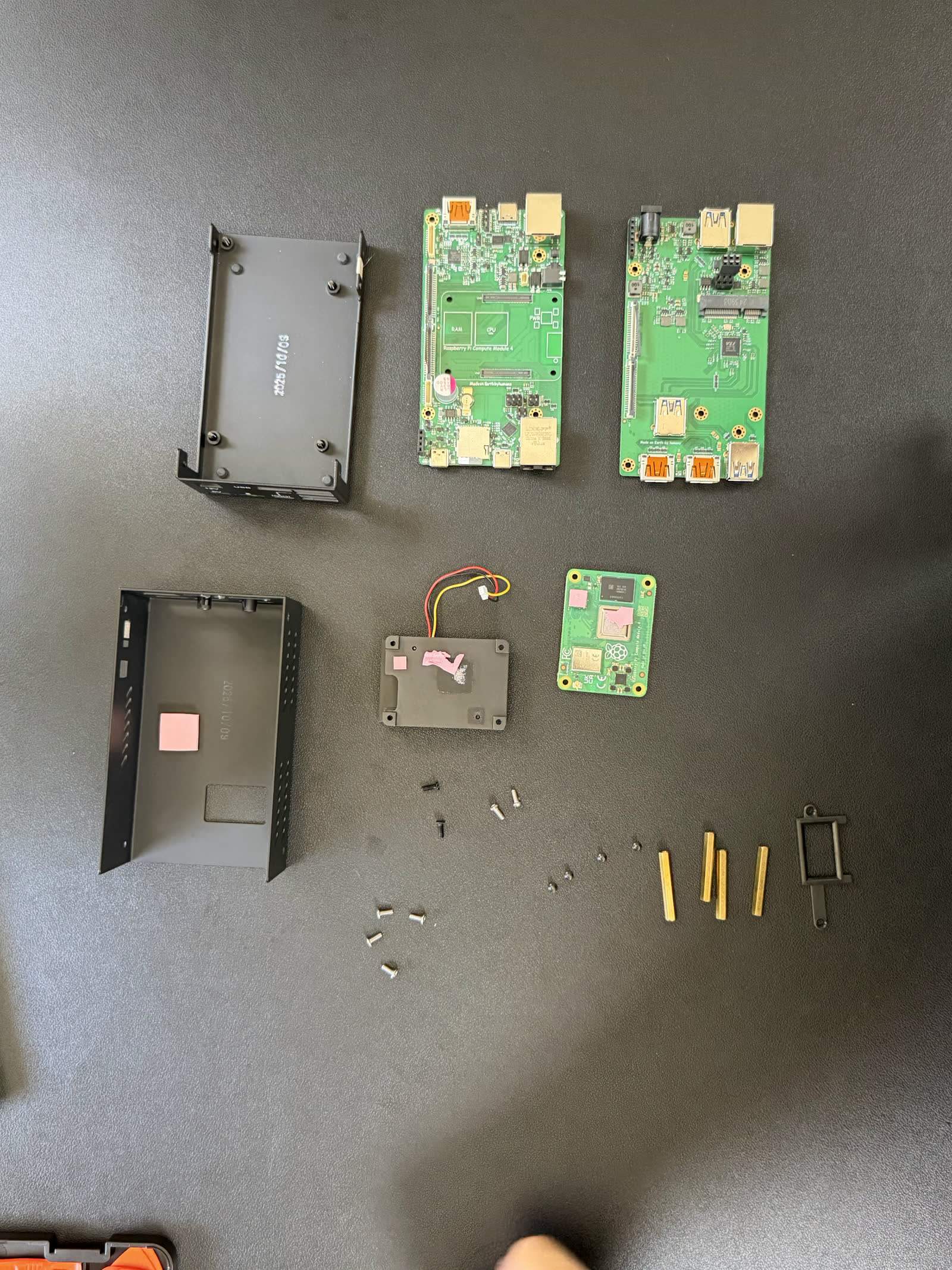
This PiKVM V4 Plus teardown completes our teardown series with the device that sits at the top of it. The PiKVM is the open-source reference for IP KVM, the platform half the market borrows software from, and it is also the most powerful hardware we own. We opened ours and put a root shell on it. Inside is the strongest processor in our fleet, a proper capture bridge, genuine storage, and a steel case that is doing real thermal work, a coherent premium design whose only real ceiling is the one every 1080p device shares.
Why open it
An IP KVM comes down to three parts: the capture chip that ingests HDMI, the SoC that encodes and streams it, and the storage that holds the firmware and any mounted ISOs. Reading those off the board tells you the resolution ceiling, the latency class, and how much you can trust a 24/7 device. The same probe across our whole fleet is compiled in the capture chip database.
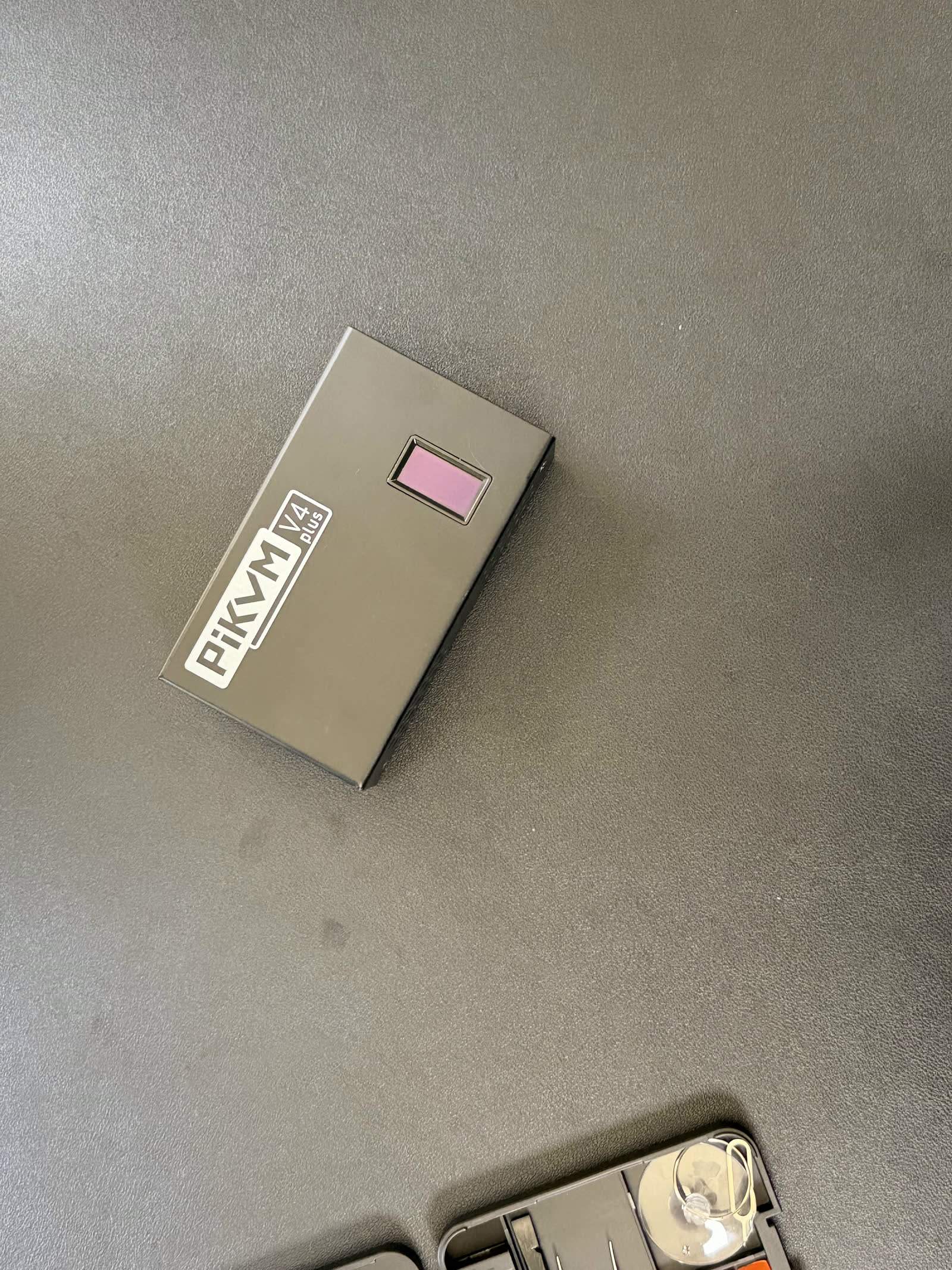
Opening it up
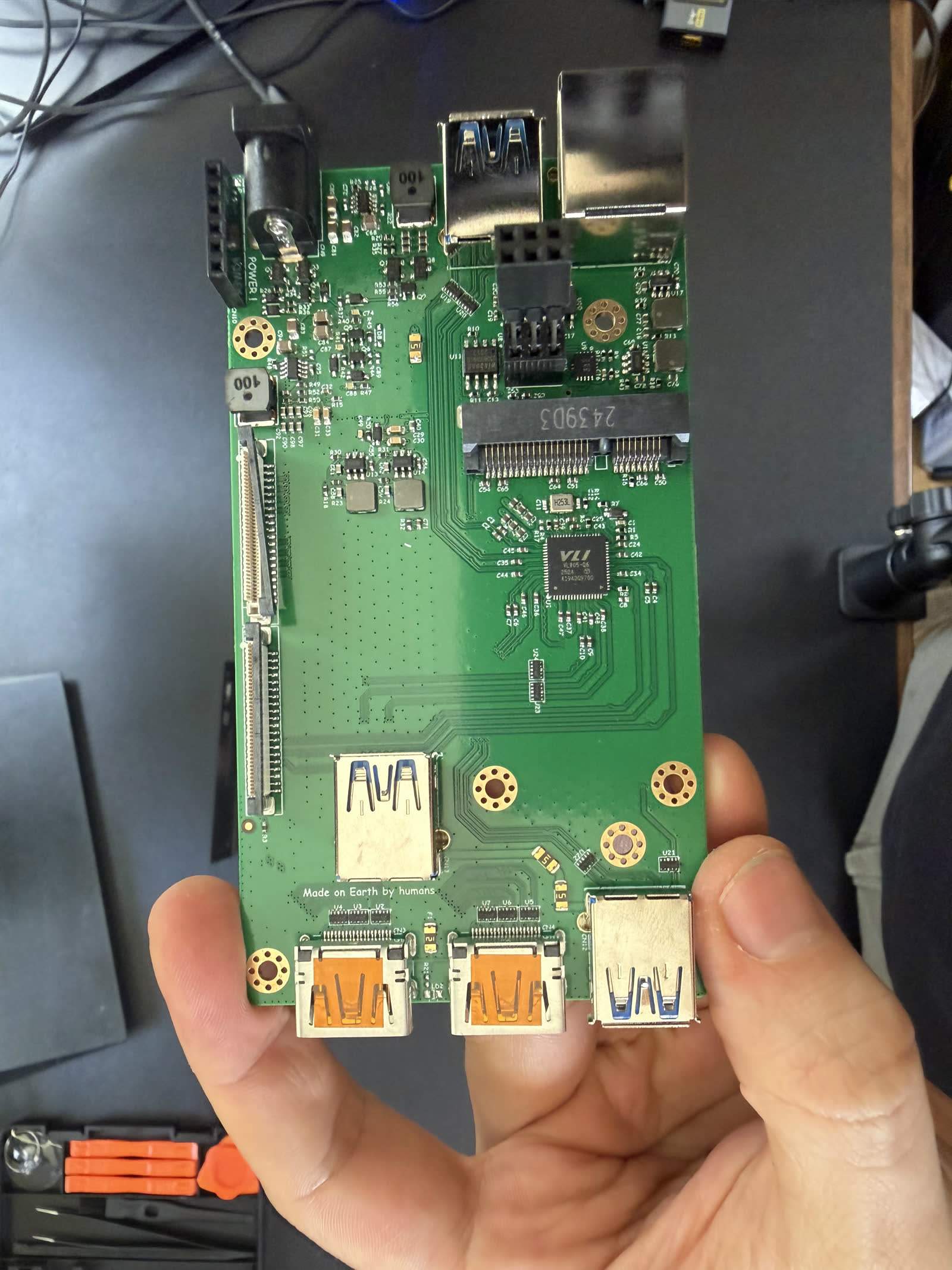
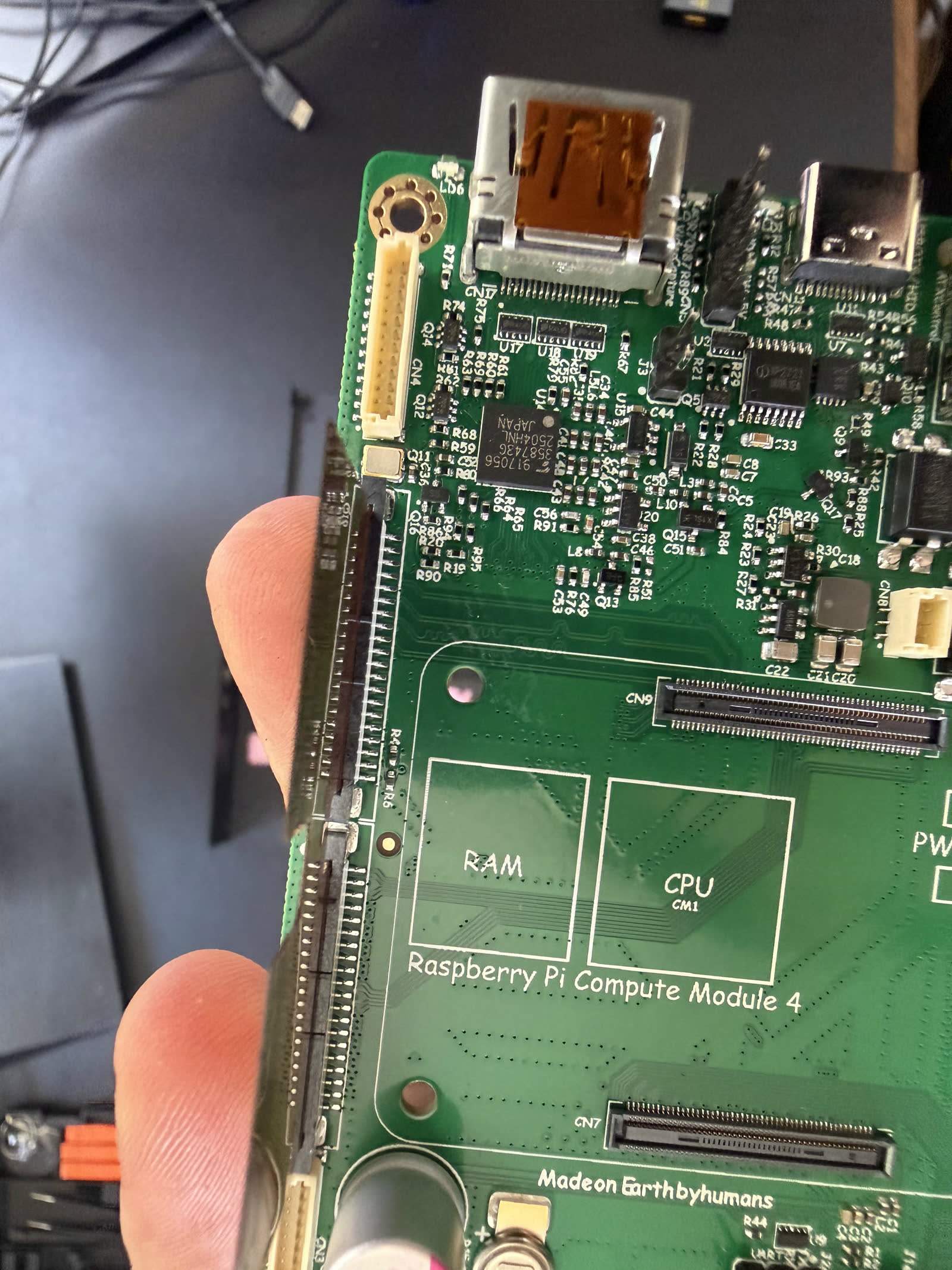
The V4 Plus is a solid, well-built unit, and opening it reveals a carrier board with a socketed compute module rather than a single fixed PCB. One caveat from our teardown: the internal H-shaped FPC ribbon connecting the capture path is fiddly, and the Raspberry Pi is less forgiving of a marginal HDMI connection than some rivals, so reassemble carefully. The steel case is not just cosmetic; it conducts heat away from the module, and it is a big part of why this device ran the coolest in our fleet.
The brain: a Raspberry Pi CM4
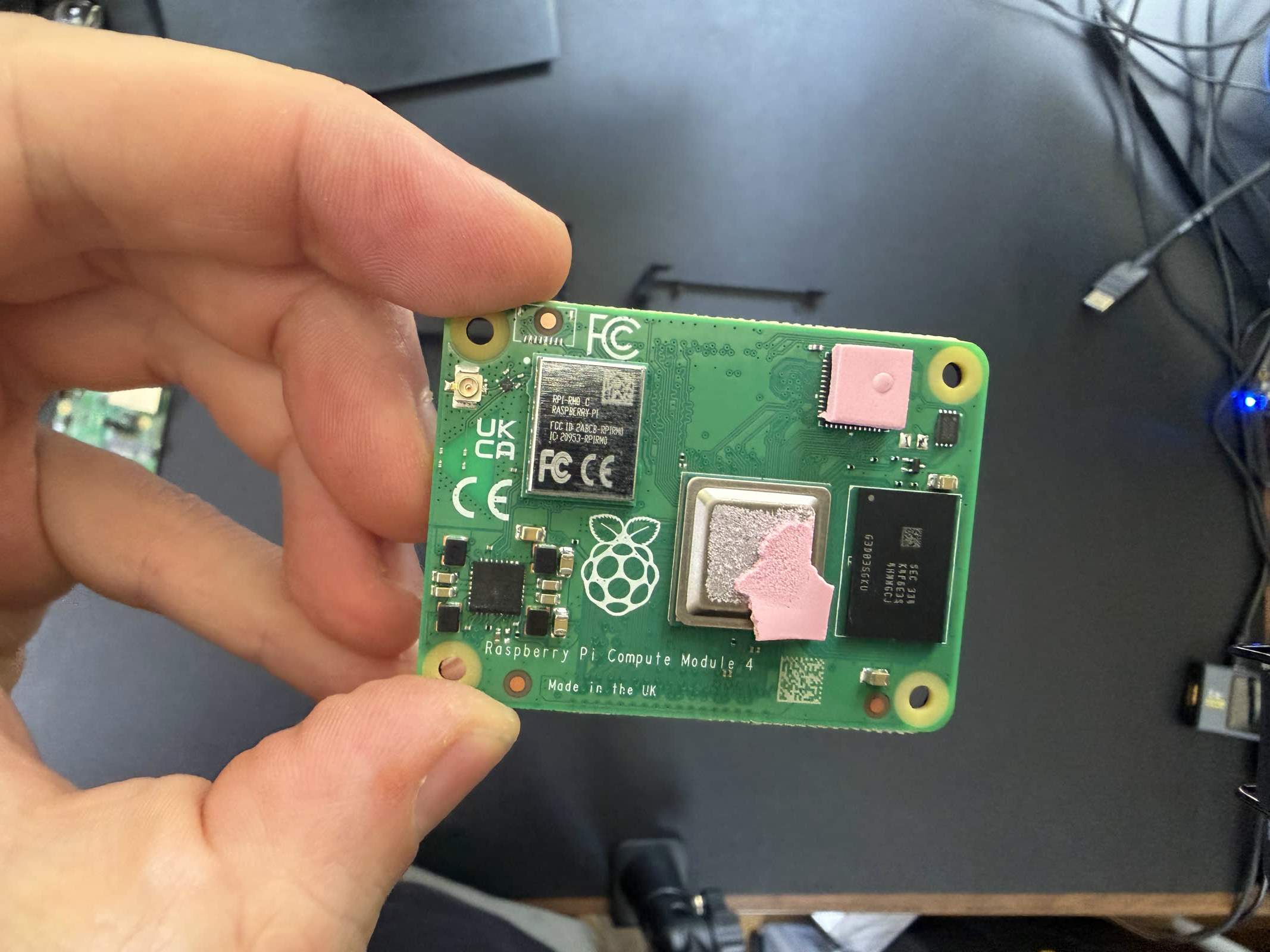
The compute module is a genuine Raspberry Pi CM4 (our unit read as Rev 1.1), carrying the Broadcom BCM2711 with four Cortex-A72 cores at 1.5 GHz and 2 GB of RAM, the most powerful CPU and the most memory of any device we tested. The A72 is an out-of-order core in a genuinely different class from the in-order A7 and A53 parts in the budget devices. It runs a current Arch Linux ARM with a 6.x kernel, the most up-to-date software stack in our fleet. That headroom is why the PiKVM comfortably runs the full open-source stack, and it is a large part of what the premium buys. Our SoC comparison sets the CM4 against the rest of the field.
Capture: a Toshiba TC358743
HDMI enters through a Toshiba TC358743 bridge feeding the CM4's camera interface (Unicam), which the SoC's Broadcom hardware encoder turns into H.264. This is the same capture chip found in the JetKVM, TinyPilot, and Luckfox, and it is the reason the PiKVM, for all its compute power, still caps at 1080p: the TC358743 speaks HDMI 1.4, so no amount of processor headroom gets it to 4K. What the powerful SoC does buy is a fast, clean pipeline: the PiKVM measured about 69 ms in our latency benchmarks, the quickest of the CM4-class devices. The bridge is covered in our HDMI-to-MIPI-CSI guide.
Storage: genuine SanDisk, read-only by design
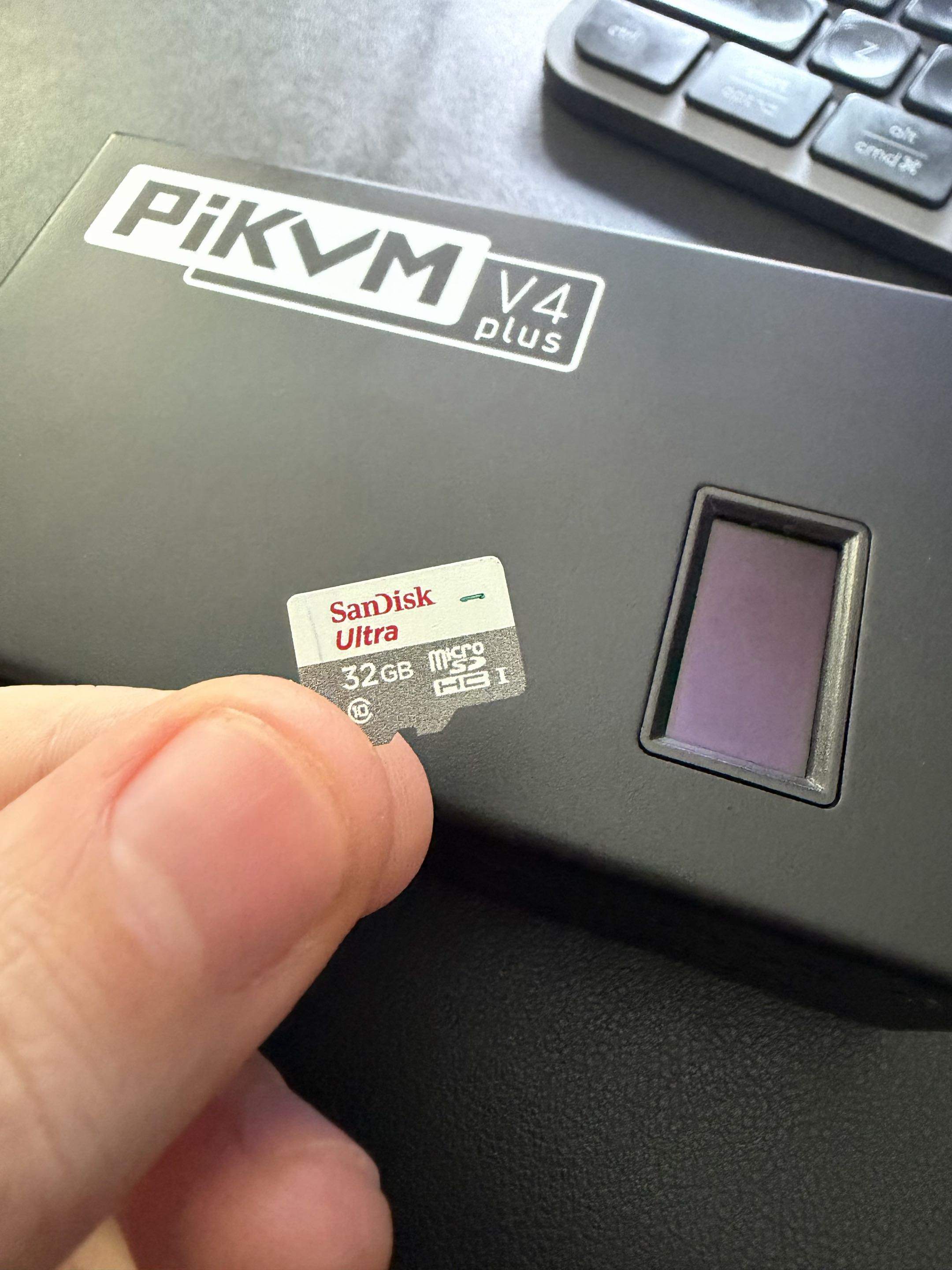
The PiKVM boots from a removable microSD, and ours is a genuine SanDisk (an SL32G, dated late 2024, as-shipped), the same quality tier as the JetKVM and a step above the generic cards some budget devices use. The software design around it is notable: the root filesystem is mounted read-only to protect the card from wear on a 24/7 device, with a dedicated writable area (around 23 GB) reserved for virtual-media ISOs. That read-only-root discipline is exactly the kind of detail that keeps flash storage alive for years, and it is a mark of a mature platform. We put every device's storage side by side in the storage provenance report.
The software and thermal design
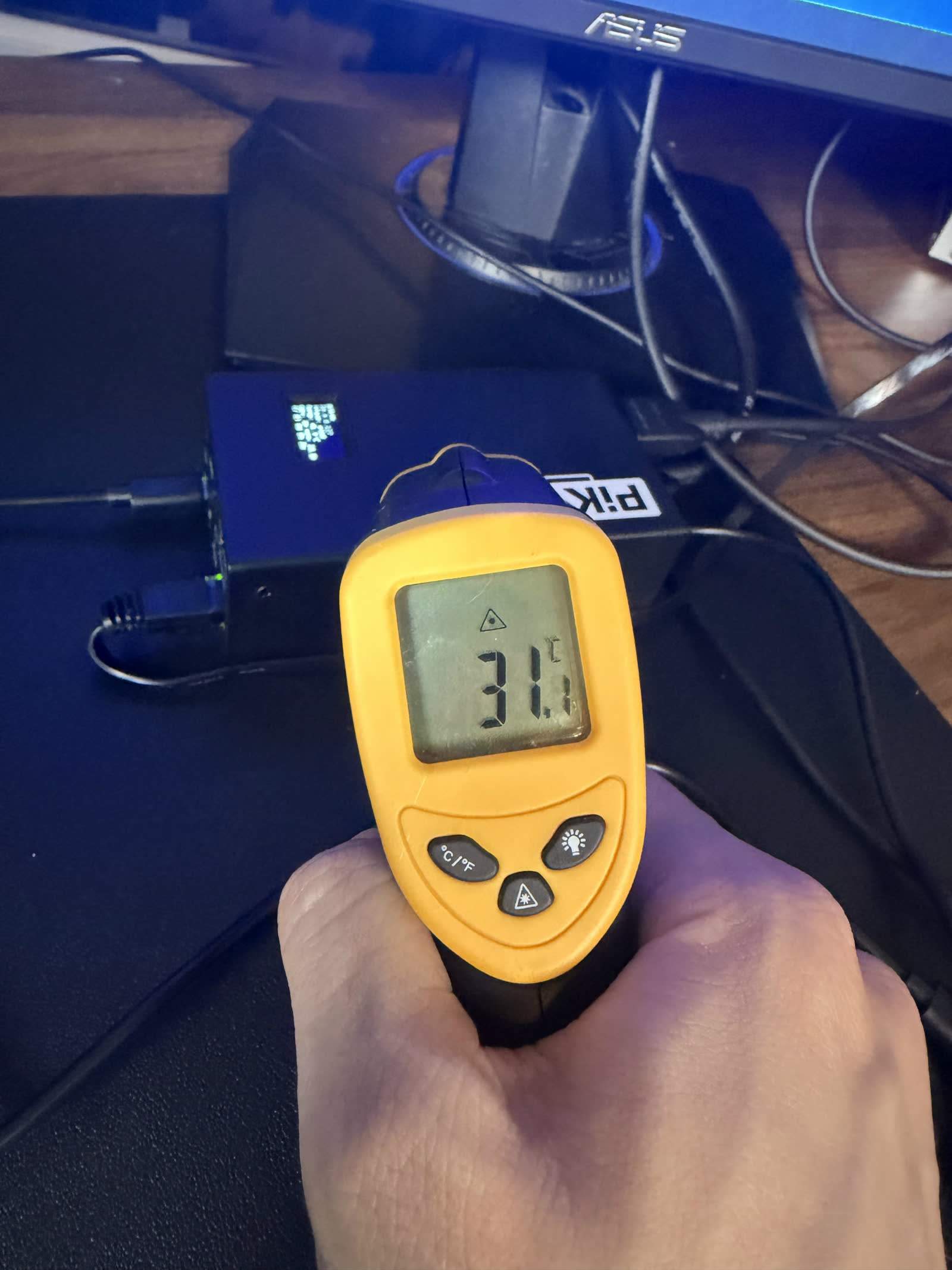
A root shell confirmed the reference open-source stack: the kvmd daemon, uStreamer for capture, and Janus for WebRTC, all fully open. The USB gadget presents three HID functions plus mass storage for virtual media, and the device has both wired Ethernet and Wi-Fi. On thermals, the CM4 reported around 46C in use, the coolest reading in our fleet, which is the steel case earning its keep by conducting heat off the module. For a quad-core processor that draws the most power in the category (about 3.5 W streaming), that cool operating temperature is a real achievement of the enclosure design, and it is covered alongside the rest of the fleet in our thermal design deep-dive.
The carrier board also provides an HDMI loop-out for a local monitor and supports the PiKVM ATX power-control wiring through the Pi's GPIO, so the flagship covers remote power and video passthrough as well as capture. Combined with dual-network connectivity, it is the most fully-featured device in our fleet, which is what you would expect at its price, and the reason it is treated as the reference the others are measured against.
The bill of materials
| Subsystem | Part | Notes |
|---|---|---|
| Compute | Raspberry Pi CM4 (BCM2711) | Quad Cortex-A72 @1.5 GHz, 2 GB RAM, most powerful in fleet |
| HDMI capture | Toshiba TC358743 | MIPI-CSI bridge, HDMI 1.4, 1080p ceiling |
| Storage | Genuine SanDisk microSD (32 GB) | Removable, read-only root, dedicated virtual-media area |
| Software | kvmd + uStreamer + Janus on Arch | The fully open reference stack, current kernel |
| Enclosure | Steel case | Doubles as heatsink; coolest-running device we tested (~46C) |
What the teardown means
The PiKVM V4 Plus is a coherent premium design: the strongest processor, the most RAM, the newest software, genuine storage handled carefully, and a case that solves the thermal problem the powerful SoC creates. Nothing inside is a cut corner. Its one hard limit is the 1080p capture bridge it shares with the budget devices, which is why it does not do 4K despite being the most capable computer in the fleet. You are paying for maturity, openness, and build quality, not resolution. The measured performance and full verdict are in our PiKVM review, and the same open-source software running on very different hardware is dissected in our open-source stack guide.
FAQ
FAQ
A Raspberry Pi CM4 (Broadcom BCM2711, quad Cortex-A72, 2 GB RAM) on a carrier board, capturing HDMI through a Toshiba TC358743 bridge, booting from a genuine SanDisk microSD, all in a steel case that acts as a heatsink. It runs the open-source kvmd, uStreamer, and Janus stack.
No. Despite having the most powerful processor in our fleet, it captures through a Toshiba TC358743, an HDMI 1.4 bridge that caps at 1080p. The SoC's power cannot overcome a capture chip that physically cannot accept a 4K signal.
Its steel case conducts heat away from the CM4, and in our testing it ran the coolest of any device at around 46C. That matters because the quad-core CM4 draws the most power in the category, so good thermal design is doing real work here.
A removable, genuine SanDisk microSD, with the root filesystem mounted read-only to protect the card from wear and a dedicated writable partition for virtual-media ISOs. That read-only-root approach is a mark of a mature, reliability-focused platform.
Every part here was read off our own unit. The measured performance this context sits against is in the PiKVM review and latency benchmarks, and the same probe on every other device is in our capture chip database.