October 21, 2026Review
JetKVM Teardown: What's Inside the Tiny Homelab KVM
We opened the KVM that shook up the homelab. Inside a case smaller than a matchbox is a Rockchip vision chip, a Toshiba capture bridge, and a genuine SanDisk card.
By Andrew Douglass · Founder
Disclosure: Our articles contain affiliate links, including Amazon. If you buy through one, we may earn a commission at no extra cost to you, and as an Amazon Associate we earn from qualifying purchases. It never affects our testing, measurements, or verdicts. Full disclosure.
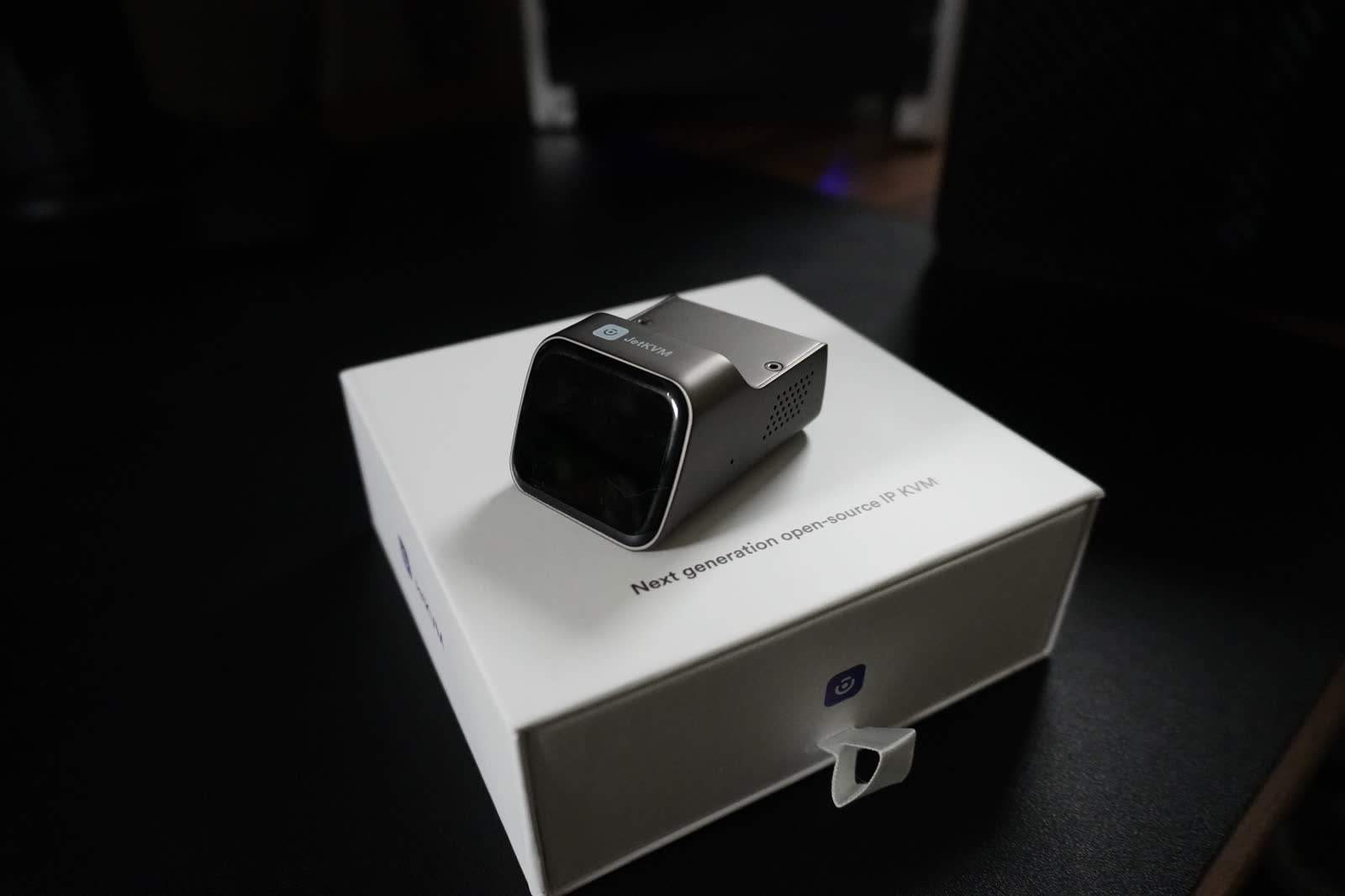
This JetKVM teardown opens the device that, more than any other, turned IP KVM from a niche homelab project into something you buy for around $100. It is remarkably small, and the interesting question is what a sub-$100 KVM actually puts on the board. We opened ours and put a root shell on it. The answer is a tidy, honest design: a Rockchip vision SoC, a Toshiba capture bridge, and, pleasantly, genuine SanDisk storage rather than a cut corner.
Why open it
An IP KVM comes down to three parts: the capture chip that ingests HDMI, the SoC that encodes and streams it, and the storage that holds the firmware. Reading those off the board tells you the resolution ceiling, the latency class, and how much you can trust a 24/7 device, none of which the spec sheet lists. The same probe across our whole fleet is compiled in the capture chip database.
Opening it up
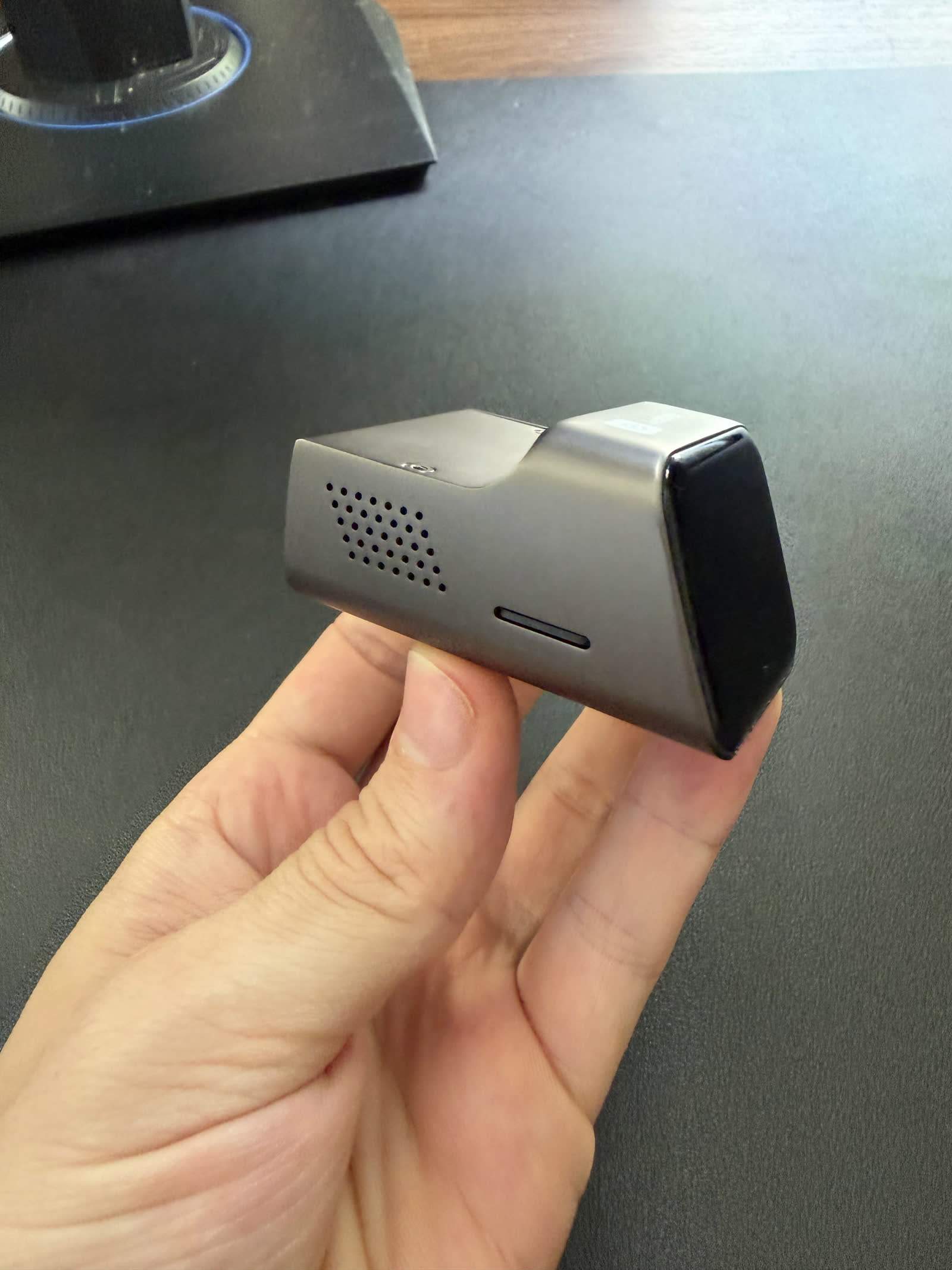
The JetKVM comes apart easily, and inside is a single small board, no swappable module, but a clean layout. One field note worth recording: the printed markings on the enclosure, including the logo, wiped off easily once the device was warm from use, which is a cosmetic quibble rather than a fault but worth knowing. There are no serviceable sub-assemblies; the value here is integration, everything on one small PCB.
The brain: a Rockchip RV1106
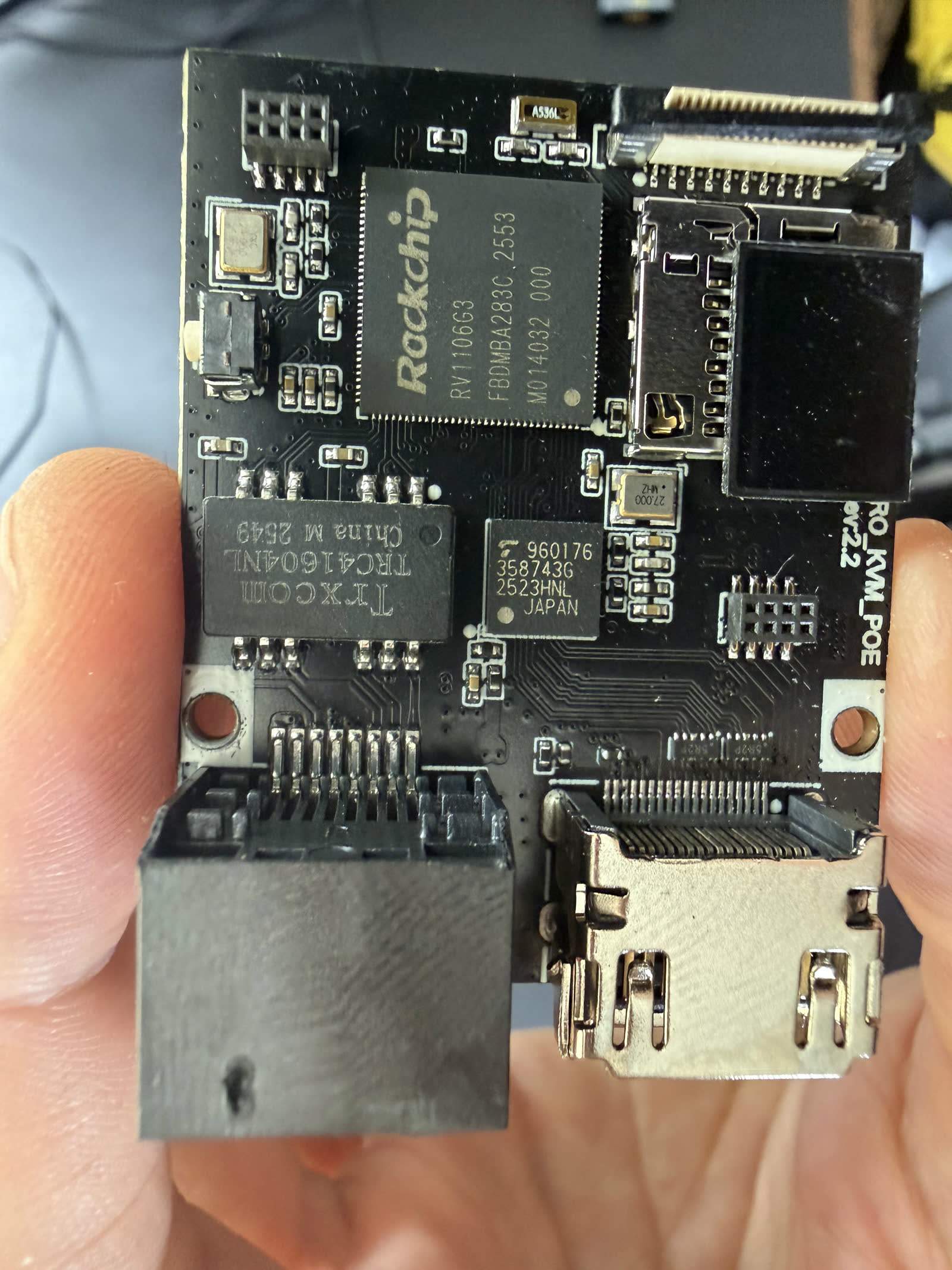
Our root-shell probe confirmed the SoC as a Rockchip RV1106G3, a single-core Cortex-A7 vision processor with DDR memory in-package and a hardware H.264/H.265 encoder driven by Rockchip's MPP framework. It is a modest, inexpensive chip designed for smart cameras, and it is exactly the right choice for a budget 1080p KVM: the CPU only orchestrates, while the fixed-function encoder does the demanding work. The same RV1106 turns up in the Luckfox PicoKVM, which clones the JetKVM's board. Our SoC comparison sets it against the rest of the field.
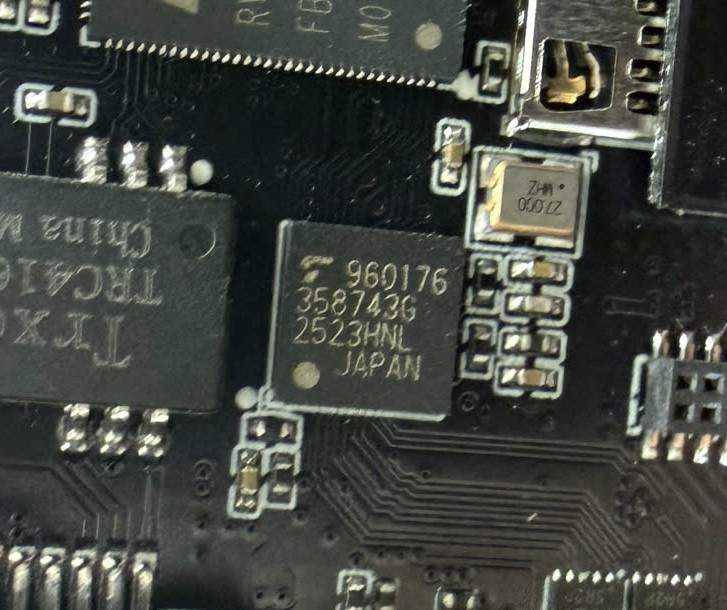
Capture: a Toshiba TC358743
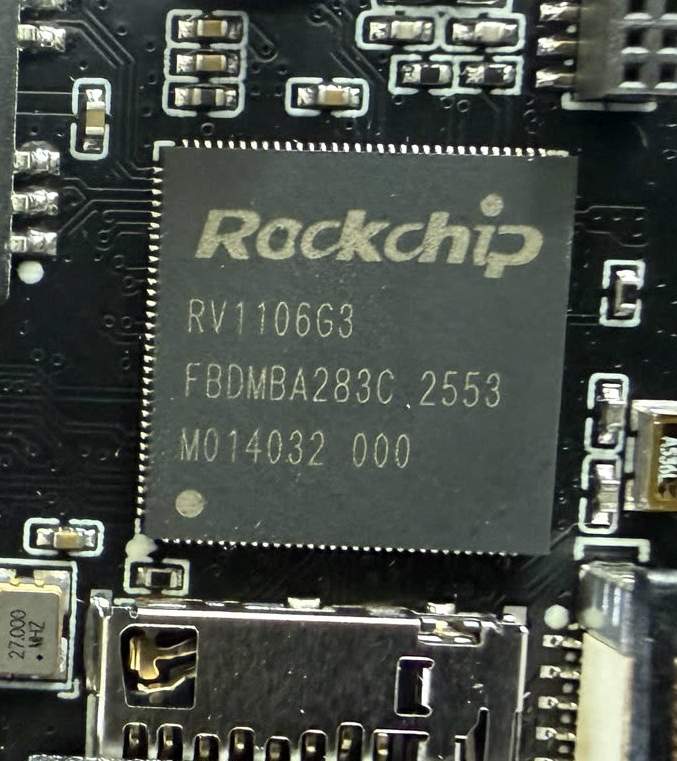
HDMI enters through a Toshiba TC358743, the MIPI-CSI bridge that also appears in the PiKVM, TinyPilot, and Luckfox. It speaks HDMI 1.4, which is why the JetKVM caps at 1080p; no firmware will get a TC358743-based device to 4K, because the front-end chip cannot accept the signal. Feeding the SoC over a direct CSI path rather than USB is why the JetKVM is responsive, measuring 59.8 ms glass to glass at 1080p60 in Chrome (Quality Low, the fastest setting) in our latency benchmarks.
Updated October 2026: re-measured on our new glass-to-glass rig at each device's best settings; why the numbers changed. The bridge is covered in depth in our HDMI-to-MIPI-CSI guide.
Storage: a genuine SanDisk microSD
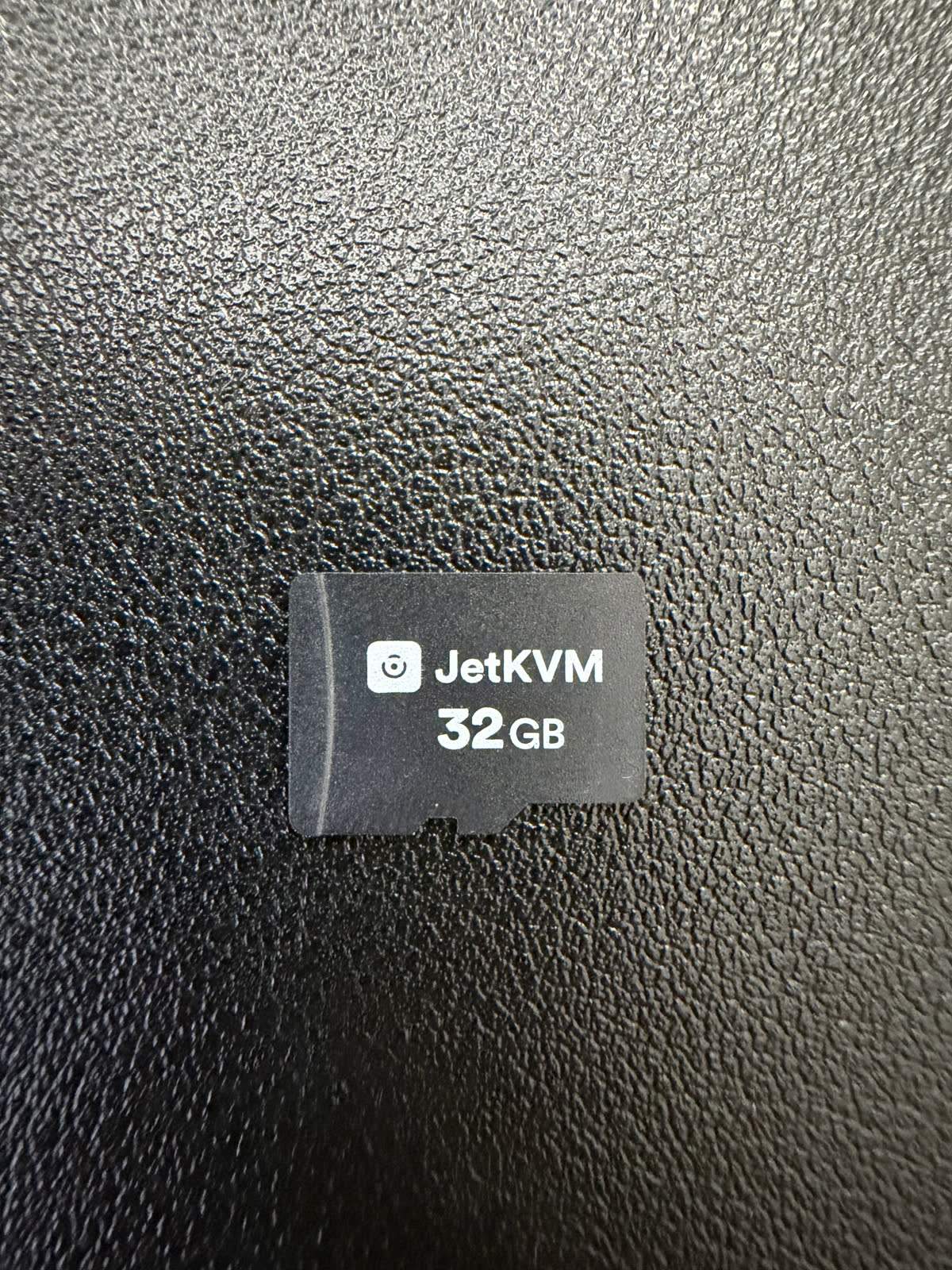
This is where the JetKVM earns trust. Rather than a soldered mystery chip or a no-name card, it ships a removable, genuine SanDisk microSD (a JetKVM-labeled rebadge, but a real SanDisk part by its register identity). The current hardware revision uses a 32 GB card. Removable storage means you can pull it, reimage it on another machine, or replace it if it ever wears, a real serviceability advantage over the soldered-eMMC devices, and genuine SanDisk silicon is a step up from the generic cards some budget rivals ship. We put every device's storage side by side in the storage provenance report.
The software and USB gadget
A root shell showed a clean, modern setup: open-source firmware (public on GitHub), an A/B dual-rootfs scheme for safe updates, and a USB gadget presenting three HID functions (keyboard and two mice) plus a mass-storage function for virtual media. There is no audio passthrough, which some rivals offer, and its WebRTC stream serves one viewer at a time. These are reasonable scoping choices for a small, focused device rather than shortcomings.
Beyond the board
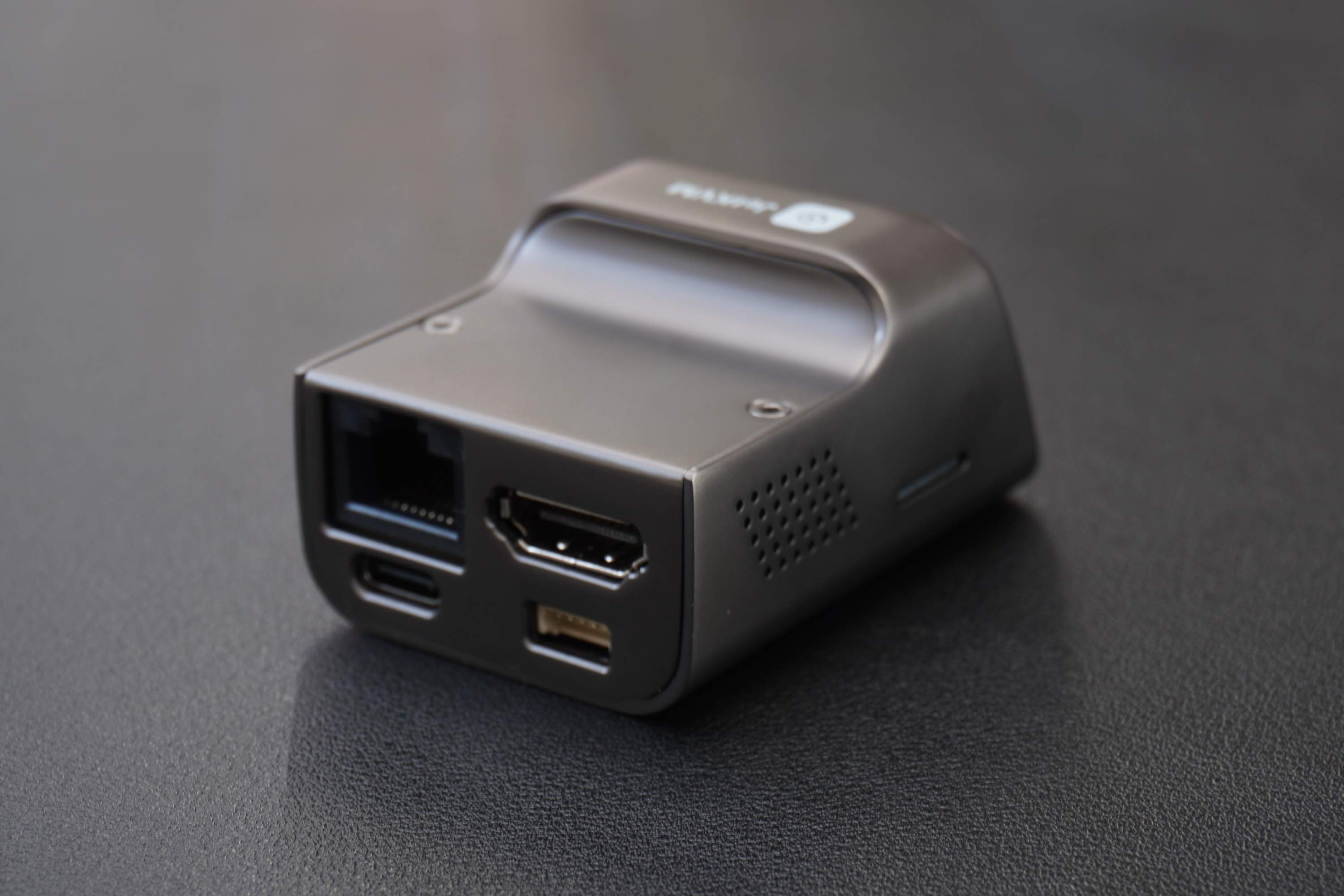
A teardown explains the hardware, but a few things about the JetKVM only make sense in context. On ports and connectivity, the current hardware revision uses a full-size HDMI input, a USB-C connection to the target, 100 Mbps Ethernet, a microSD slot, and a dedicated extension connector, a sensible and uncluttered set for a device this size. There is no front display: unlike the Sipeed NanoKVM with its little screen, the JetKVM keeps a single status LED, which suits its minimalist design.
For remote access and cloud features, the JetKVM offers its own JetKVM Cloud relay and works cleanly with Tailscale for a self-hosted path with no port forwarding, which we cover in our Tailscale KVM guide. The ATX power control extension plugs into that extension connector to power-cycle a hung machine remotely by driving the motherboard's front-panel header. And for multi-PC support, the community-favorite trick is putting one JetKVM behind a cheap HDMI switch to reach several machines, which we test in one JetKVM, multiple computers.
A word on security: the JetKVM ships in better shape than some rivals, without the default-credential problems that dog parts of the budget NanoKVM class, but any device with hardware-level access belongs on a segmented network behind a VPN rather than exposed to the internet. The JetKVM came out of a well-backed Kickstarter (the team traces to BuildJet) and drew early attention from reviewers like Jeff Geerling, which is part of why it set the template the rest of the budget field now follows, down to its HEVC-capable Rockchip encoder.
The bill of materials
| Subsystem | Part | Notes |
|---|---|---|
| SoC | Rockchip RV1106G3 | Single Cortex-A7, DDR in-package, hardware H.264/H.265 |
| HDMI capture | Toshiba TC358743 | MIPI-CSI bridge, HDMI 1.4, 1080p ceiling |
| Storage | Genuine SanDisk microSD (32 GB) | Removable and serviceable, a rebadged but real SanDisk |
| Software | Open-source firmware, A/B rootfs | Public on GitHub, safe dual-slot updates |
| USB gadget | 3 HID + mass storage | Keyboard, two mice, virtual media; no audio |
What the teardown means
The JetKVM is an object lesson in doing a budget device honestly. The parts are inexpensive but sensible: a cheap-but-right vision SoC, the same proven Toshiba capture bridge the premium CM4 devices use, and genuine removable storage instead of a cut corner. Nothing here is exotic, and nothing here is a trap. That combination is why it landed in the front half of the pack on latency, sips power, and earns its reputation. Its one hard limit, 1080p, is the capture chip, not a fixable setting. The measured performance and the full verdict are in our JetKVM review, and the clone that copies this exact board is in our Luckfox teardown.
FAQ
FAQ
A Rockchip RV1106G3, a single-core Cortex-A7 vision processor with DDR memory in-package and a hardware H.264/H.265 encoder. It is inexpensive but well-suited to a 1080p KVM, since the fixed-function encoder does the heavy lifting rather than the CPU.
A Toshiba TC358743, an HDMI-to-MIPI-CSI bridge. It speaks HDMI 1.4, which is why the JetKVM caps at 1080p, and it is the same capture chip found in the PiKVM, TinyPilot, and Luckfox PicoKVM.
A removable microSD card, and a genuine (if JetKVM-rebadged) SanDisk one. That is a serviceability advantage over rivals with soldered eMMC: you can pull it, reimage it, or replace it, and it is better-quality storage than the generic cards some budget devices ship.
Yes, it is public on GitHub under an open license, and the device uses an A/B dual-rootfs scheme for safe updates. That openness is also why the Luckfox PicoKVM was able to clone the JetKVM's hardware and fork its software.
Every part here was read off our own unit. The measured performance this context sits against is in the JetKVM review and latency benchmarks, and the same probe on every other device is in our capture chip database.