October 27, 2026Review
TinyPilot Voyager 3 Teardown: A CM4, a Toshiba Bridge, and uStreamer
We opened the most premium IP KVM we own. Inside is a Raspberry Pi, a Toshiba capture chip, and the same open-source software a cheaper PiKVM runs.
By Andrew Douglass · Founder
Disclosure: Our articles contain affiliate links, including Amazon. If you buy through one, we may earn a commission at no extra cost to you, and as an Amazon Associate we earn from qualifying purchases. It never affects our testing, measurements, or verdicts. Full disclosure.
This TinyPilot Voyager 3 teardown answers a question the price tag raises: what is inside the most polished IP KVM we own, and does it justify being several times dearer than the newcomers? We opened ours, put a shell on it, and read every chip. The short answer is that the Voyager 3 is a Raspberry Pi Compute Module 4 with a Toshiba capture bridge, running the open-source uStreamer streaming engine. That is the same core hardware and the same video software that powers a PiKVM. The premium buys polish and support, not exotic silicon.
What a teardown tells you
A KVM over IP captures a machine's HDMI output and emulates a USB keyboard and mouse, so you can control a server at the BIOS level from a browser. The interesting engineering is in three parts: the capture chip that ingests HDMI, the SoC that encodes and streams it, and the storage that holds the OS and any mounted ISOs. Identifying those parts tells you the resolution ceiling, the likely latency class, and the reliability of a device meant to run 24/7. We do the same probe on every unit; the fleet-wide chip map lives in our capture chip database.
Opening it up
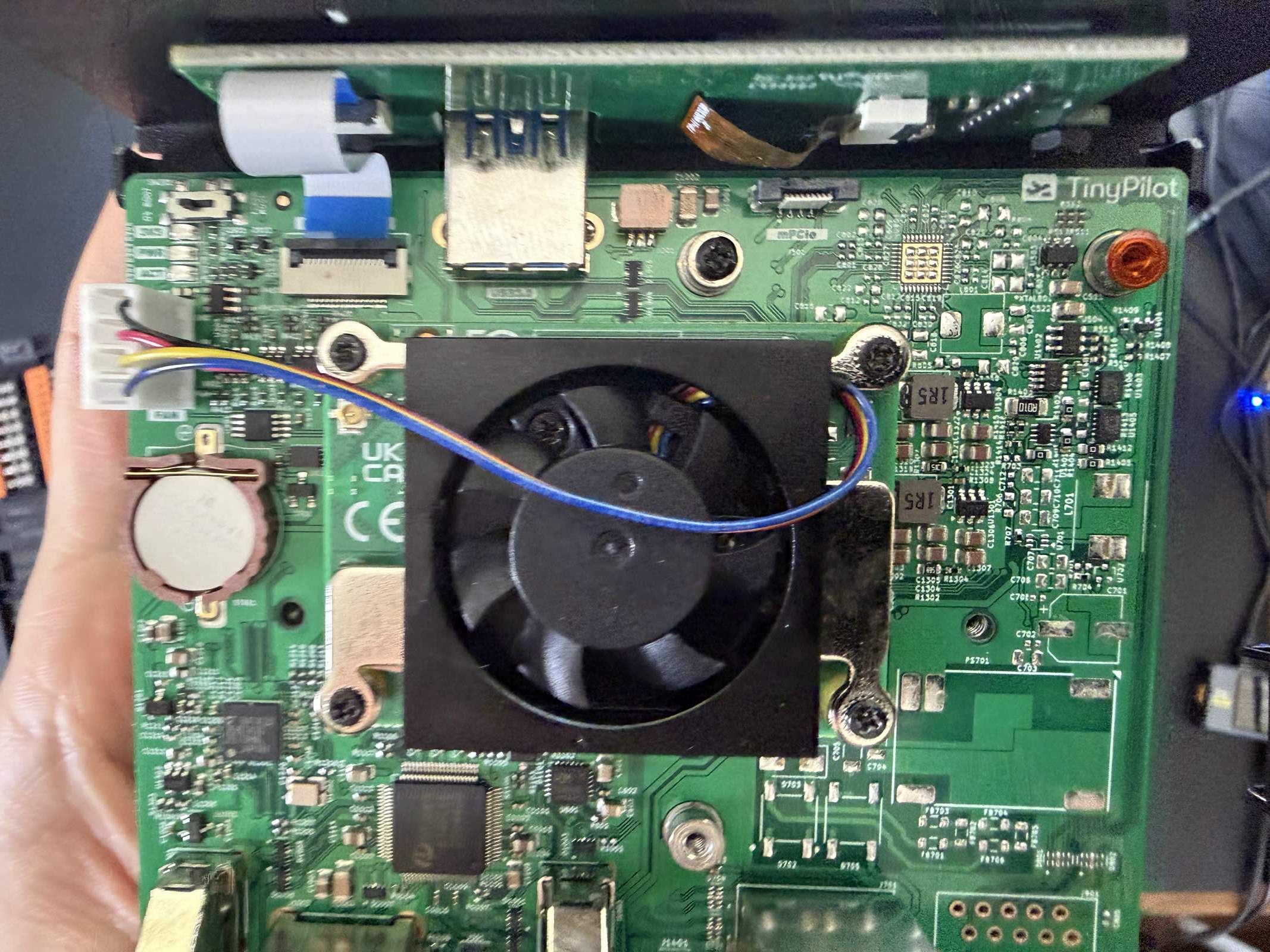
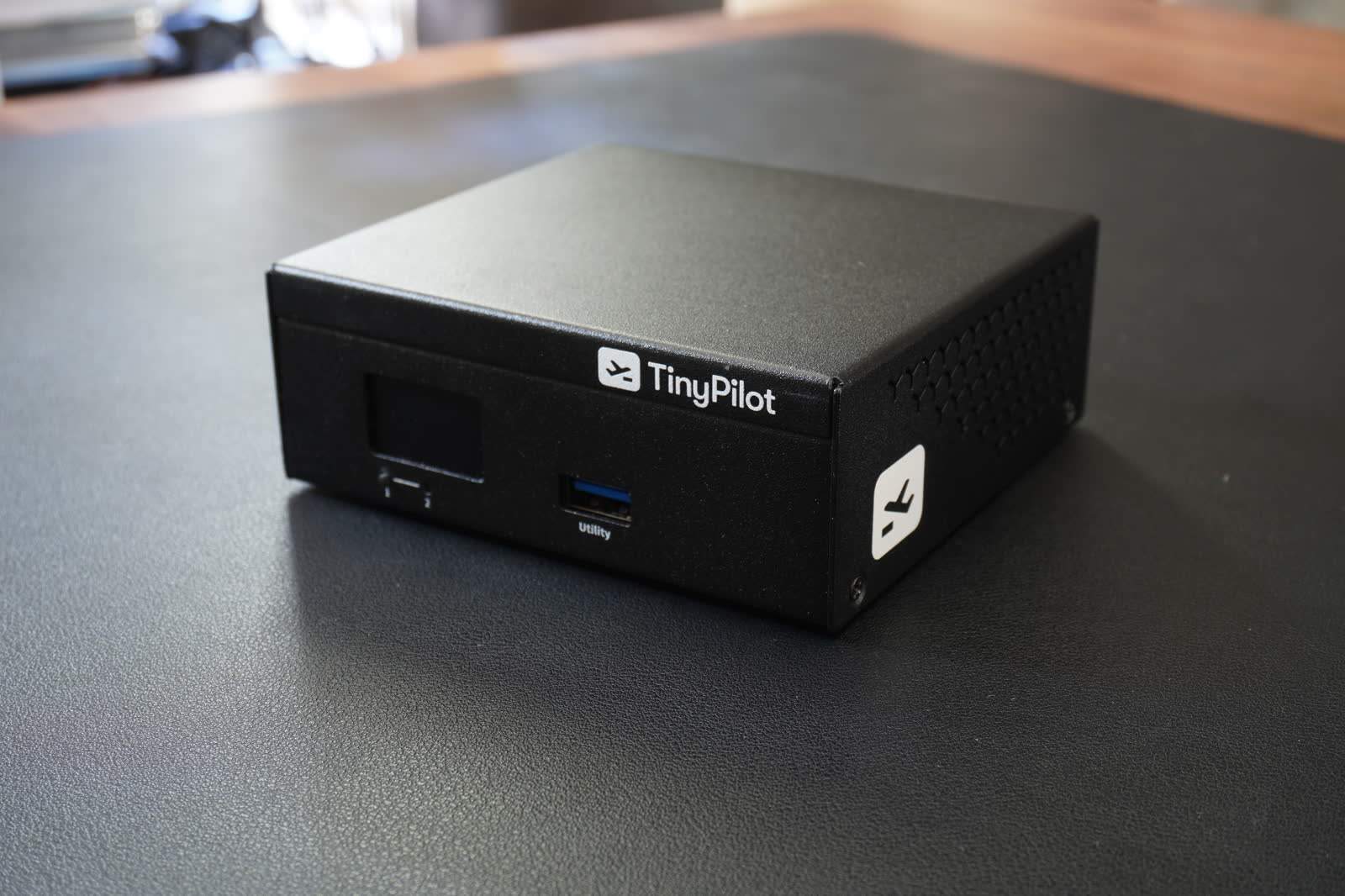
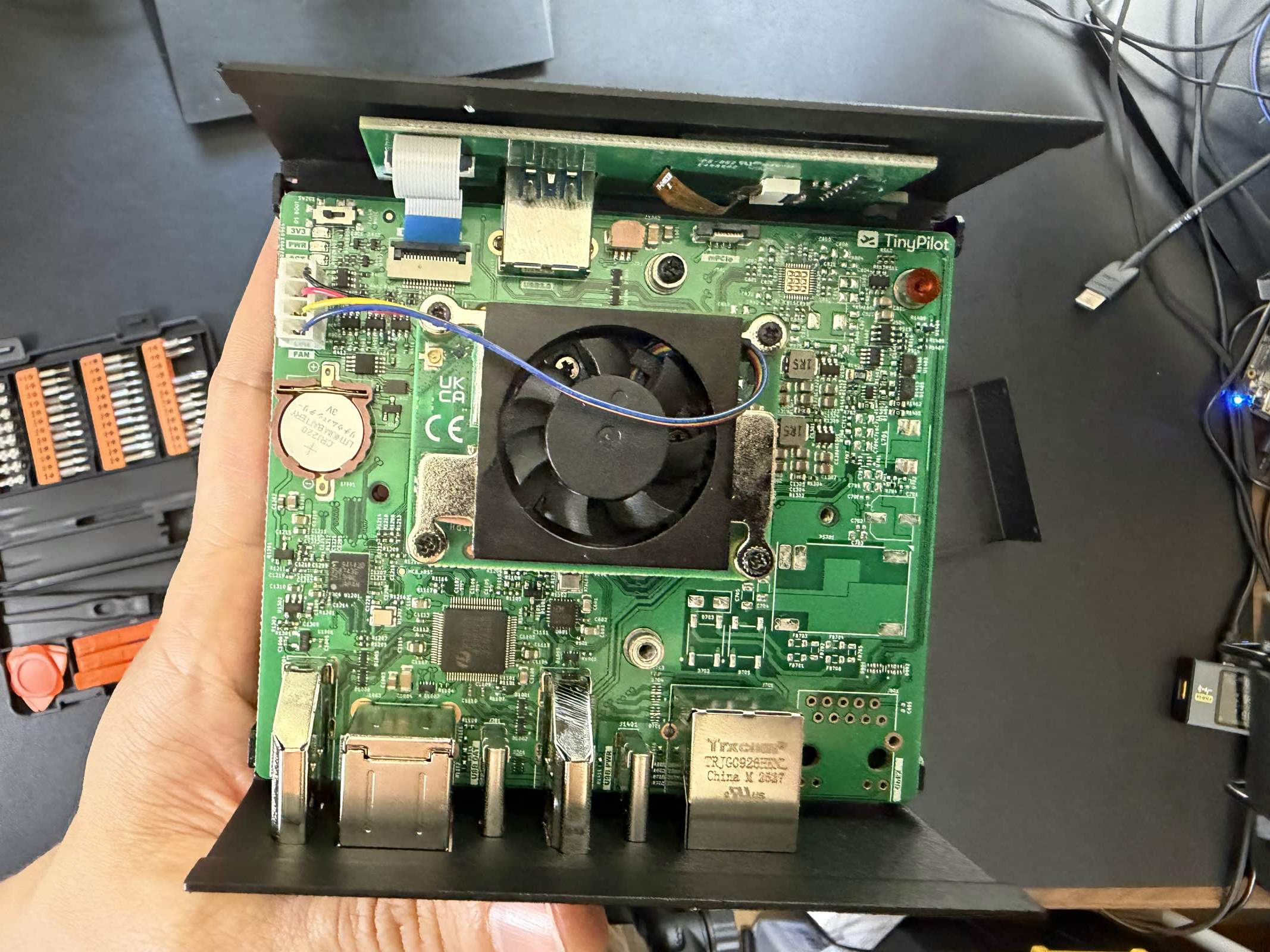
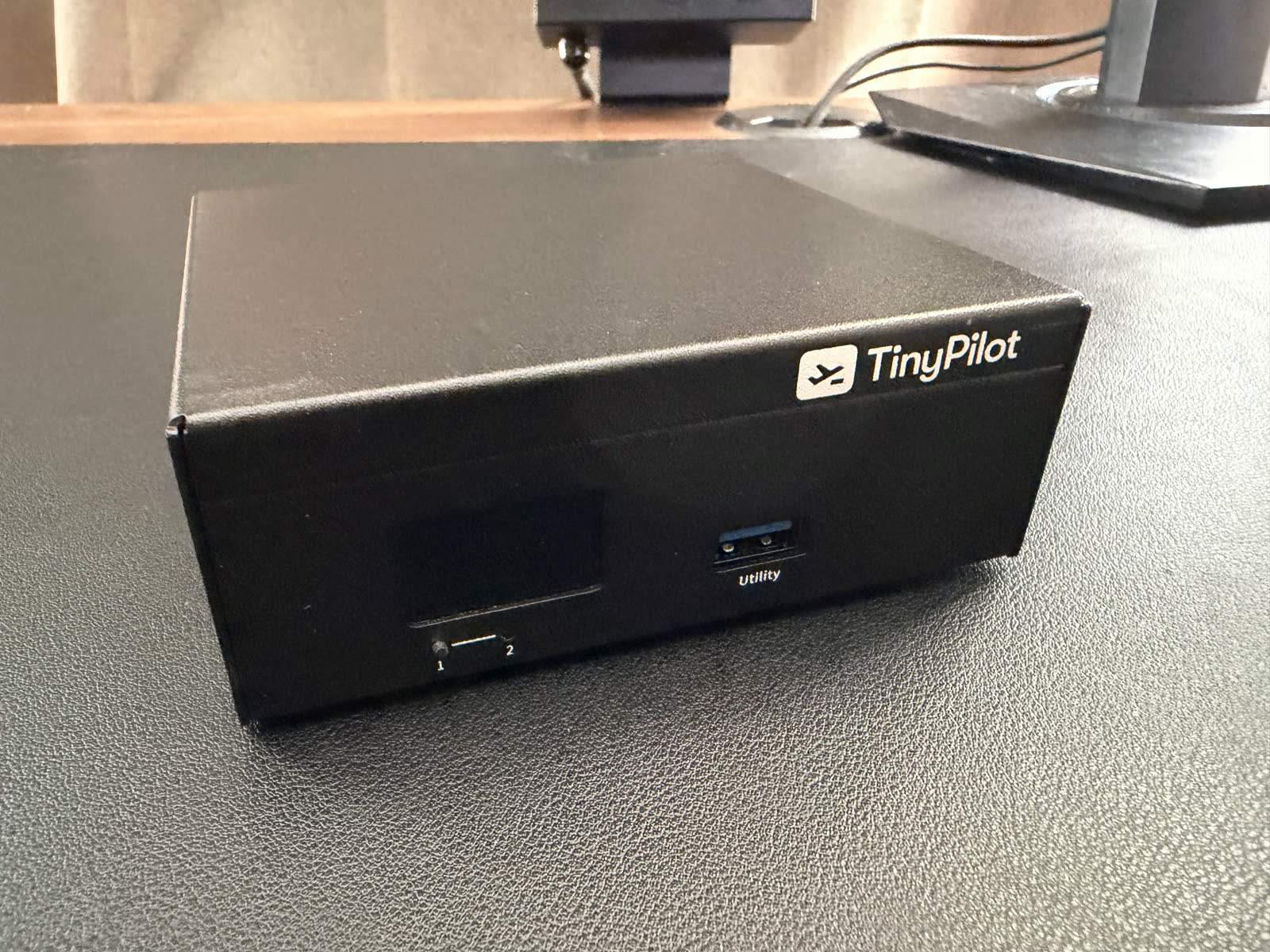
The Voyager 3 has the nicest presentation of any device on our bench, with a solid metal chassis, a front status display, and retail-grade packaging down to branded cables and a branded power adapter. Opening it is straightforward, with the one caveat that we stripped a screw freeing the internal PCB, so go slow with a properly-fitted driver. Once inside, the layout is clean and, unusually, serviceable: the brain is a socketed module you can lift out and replace.
The brain: a Raspberry Pi Compute Module 4
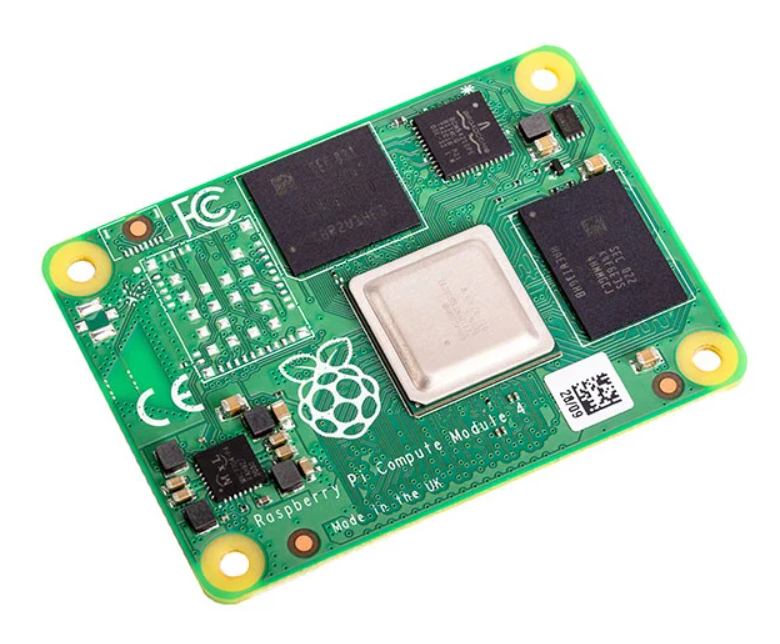
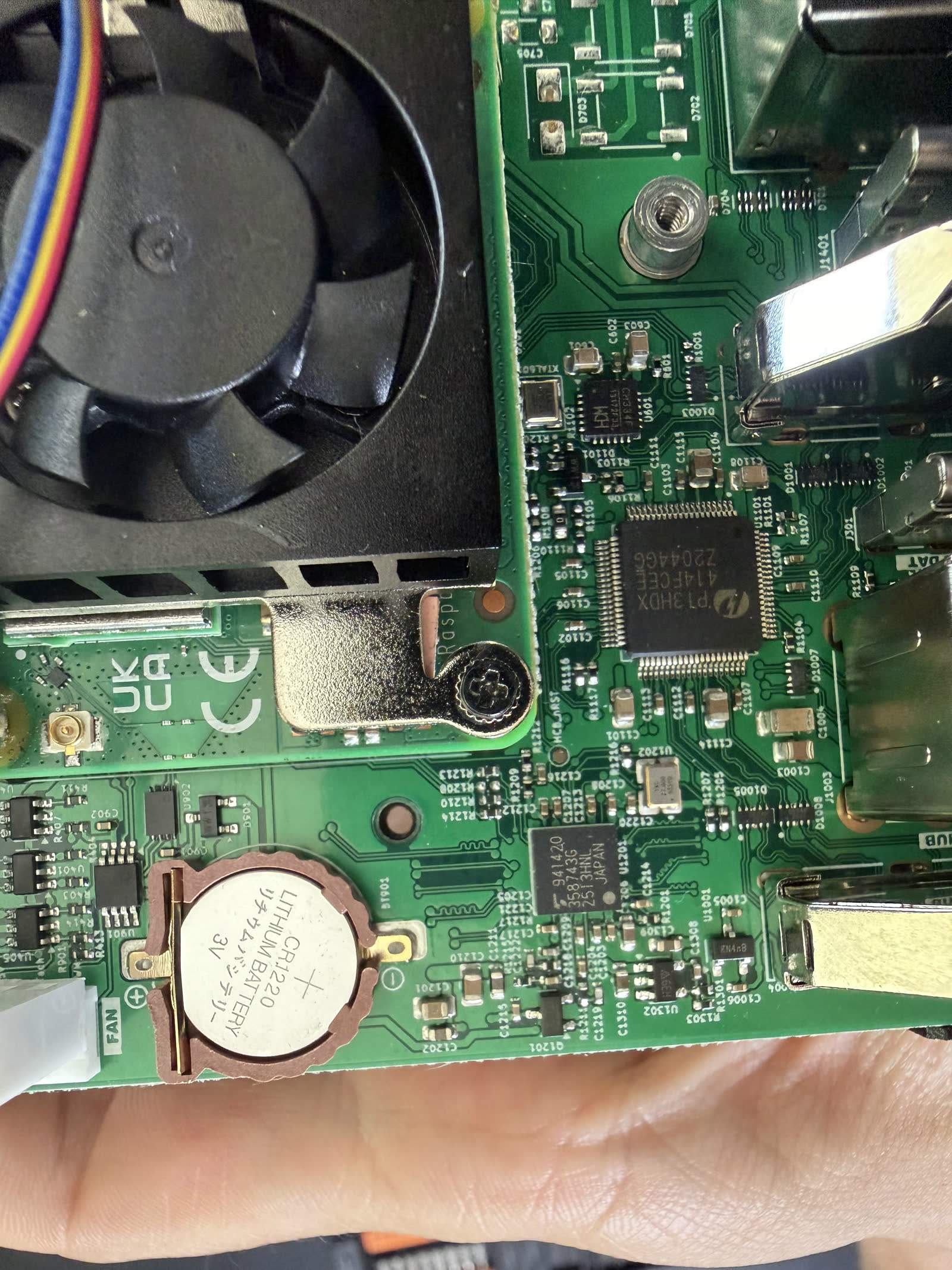
The compute module is a genuine Raspberry Pi CM4 (our unit read as revision b03141), carrying the Broadcom BCM2711 with four Cortex-A72 cores and 2 GB of RAM. This matters for two reasons. First, it is the same class of module inside a PiKVM V4, so the two devices share a hardware ceiling. Second, because it is a standard socketed CM4, the Voyager 3 is one of only two devices in our fleet (the other being the PiKVM) whose core compute you can actually swap or upgrade. That is a real repairability win, and we score it in the repairability index.
Storage: a soldered Samsung eMMC
The CM4 in our unit is an eMMC variant with a Samsung 32 GB module (part marking BJTD4R) carrying an August 2024 date code. That is current, genuine storage, a contrast with the seven-year-old old-stock chip we found in the Luckfox and a point in TinyPilot's favor on the storage provenance report. Because the eMMC is soldered to the module rather than a removable card, you cannot pull it to reimage on another machine the way you can with the microSD in a JetKVM or PiKVM. The trade is reliability and speed for field-serviceability, a defensible choice on an appliance.
Capture: a Toshiba TC358743, upgraded from USB
HDMI enters through a Toshiba TC358743 bridge, the same MIPI-CSI capture chip used by the JetKVM, PiKVM, and Luckfox. This is the part that sets the 1080p ceiling shared by every device that uses it, and it feeds the CM4 over the camera interface rather than USB. Worth noting for anyone tracking the lineage: the older Voyager 2a used a MacroSilicon MS2109 USB capture dongle, and moving the Voyager 3 to a CSI bridge was the right engineering call, since a CSI path avoids the USB bandwidth bottleneck that caps USB-capture designs like the BliKVM. Our HDMI capture explainer covers why the interface, not just the chip, decides the ceiling.
The software stack, and a thermal flag
With a shell open, the software is as revealing as the silicon. The Voyager 3 runs uStreamer 6.36, the open-source streaming engine developed by the PiKVM project, alongside Janus for WebRTC, on a Raspbian 11 base with a 32-bit kernel (6.1.21). In other words, both the capture hardware and the core video pipeline are the same open-source foundation the PiKVM ecosystem built. That is legitimate reuse of good work, not a criticism, but it reframes the price: you are paying TinyPilot for the appliance, the packaging, the warranty, and the support, because the streaming core is shared and free.
One thing our probe caught that a spec sheet never shows: the unit reported undervoltage and CPU throttling since boot. That points at the power supply or cable rather than a design fault, and it is worth ruling out on any CM4-based device, but it is also consistent with the high latency and power we measured elsewhere. The full numbers are in the Voyager 3 review, and the thermal behavior across the fleet is in our power comparison.
The bill of materials
| Subsystem | Part | Notes |
|---|---|---|
| Compute | Raspberry Pi CM4 (BCM2711) | Quad Cortex-A72, 2 GB RAM, socketed and swappable |
| Storage | Samsung 32 GB eMMC (BJTD4R) | Soldered to the module, dated 08/2024, genuine |
| HDMI capture | Toshiba TC358743 | MIPI-CSI bridge, 1080p ceiling, upgrade from the 2a's MS2109 |
| Streaming | uStreamer 6.36 + Janus | PiKVM project's open-source engine, on Raspbian 11 |
| Chassis | Metal, front status display | Best build and packaging in our fleet |
What the teardown means
The Voyager 3 is well engineered and well built, and nothing inside is wrong. But the teardown makes the value question concrete: its capture chip, its compute module, and its streaming software are the same three ingredients a PiKVM uses, and in our testing the PiKVM was substantially faster on the same foundation. If you want that foundation done cheaply, a JetKVM shares the same Toshiba capture chip for a quarter of the price. What TinyPilot uniquely offers is the finished-product experience: the packaging, the metal, the swappable CM4, genuine current storage, a warranty, and a US company behind it. Whether that is worth the premium is the whole argument of our full review, and the head-to-head is in PiKVM vs TinyPilot.
FAQ
FAQ
A Raspberry Pi Compute Module 4 (Broadcom BCM2711, quad Cortex-A72, 2 GB) with a soldered Samsung 32 GB eMMC, a Toshiba TC358743 HDMI capture bridge, and the open-source uStreamer streaming engine plus Janus on a Raspbian 11 base.
Yes. The Voyager 3 is built on a genuine Raspberry Pi CM4, seated in a socket, which is also why it is one of the few IP KVMs whose core compute module you can remove and replace.
Very close. Both use a Raspberry Pi CM4 with a Toshiba TC358743 capture chip and the uStreamer streaming engine. The hardware and video-software core are shared; the differences are the chassis, packaging, storage choice, and vendor support, not the fundamental architecture.
Not easily. The eMMC is soldered to the Compute Module 4 rather than a removable card, so unlike a JetKVM or PiKVM you cannot pop the storage out to reimage it. You can, however, swap the entire CM4 module.
A Toshiba TC358743, a MIPI-CSI HDMI bridge that caps capture at 1080p. It is an upgrade over the MacroSilicon MS2109 USB dongle used in the older Voyager 2a, because the CSI interface avoids the USB bandwidth bottleneck.
Every part here was read off our own unit. The measured performance that context sits against is in the TinyPilot Voyager 3 review, and the same probe on every other device is in our capture chip database and storage provenance report.