September 24, 2026Journal entry
How I started building a KVM
A datacenter full of KVMs, the $6 million Kickstarter that inspired me, five months on the wrong chip, and what I got wrong. The first entry in the WarpKVM build journal.
By Andrew Douglass · Founder
Disclosure: Our articles contain affiliate links, including Amazon. If you buy through one, we may earn a commission at no extra cost to you, and as an Amazon Associate we earn from qualifying purchases. It never affects our testing, measurements, or verdicts. Full disclosure.
This is the first entry in the WarpKVM build journal, so it starts at the beginning: a datacenter full of bare metal machines, a Kickstarter that raised nearly $6 million, and the thought "I could make this, and do it cheaper." Some of that thought held up. Some of it was naive in ways that took sixteen months, most of them part time, and six different processors to find out.
It started in a datacenter
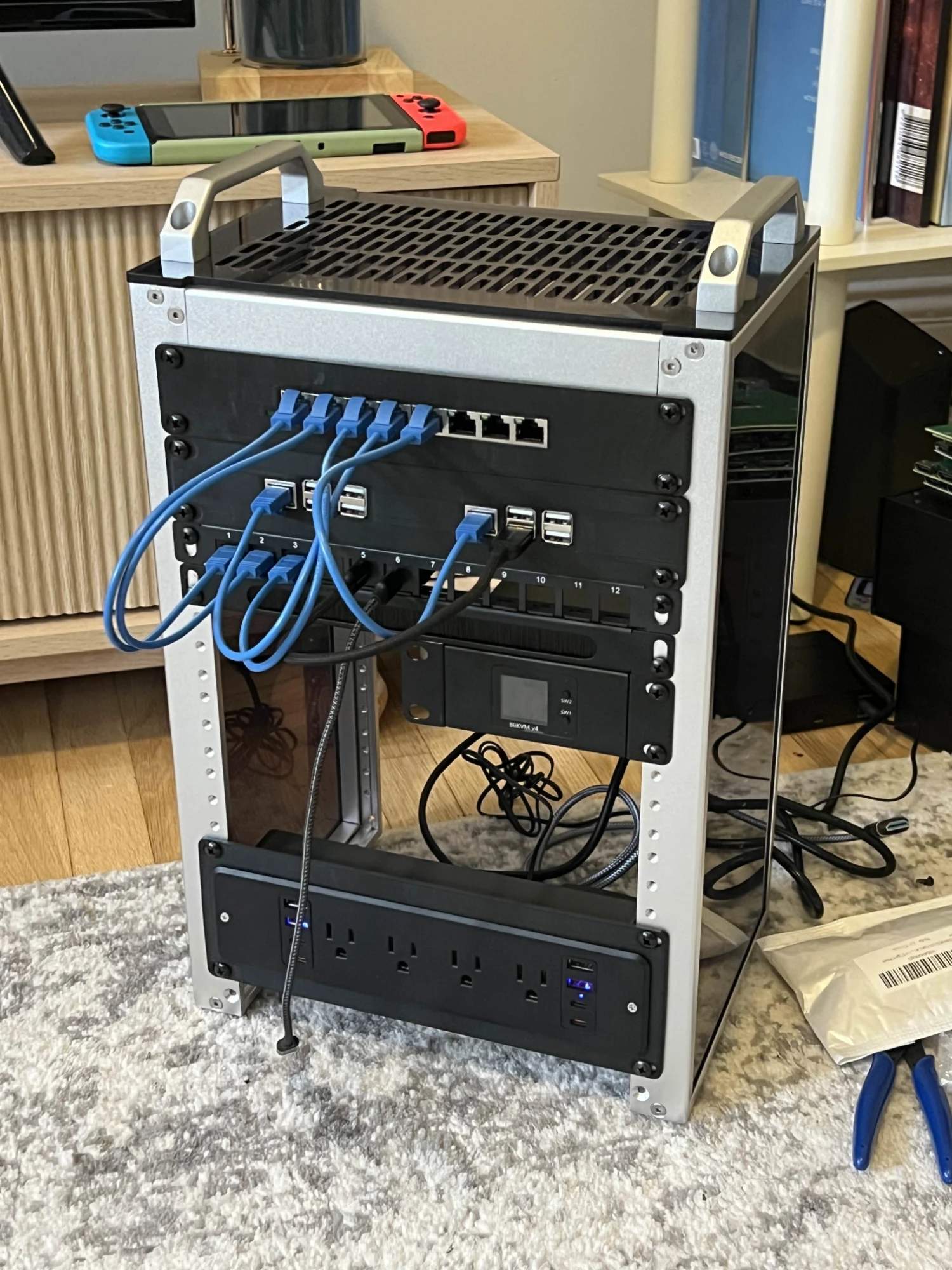
At PiKVM V4 Mini prices, around $275 a machine, putting a KVM on 36 servers costs close to $10,000. Enterprise gear is worse. A 32-port Raritan Dominion KX III lists from about $4,400 for one remote user to over $11,000 for eight, and every server also needs its own adapter at $170 to $230, which is another $5,000 to $7,000 for a full rack. The first KVM hardware I built was a 1:36 KVM switcher that put all 36 behind one KVM for under $1,000 in parts, and a 1:24 version for under $700, not counting my time. They were for a cloud gaming company I was helping build out datacenter infrastructure.
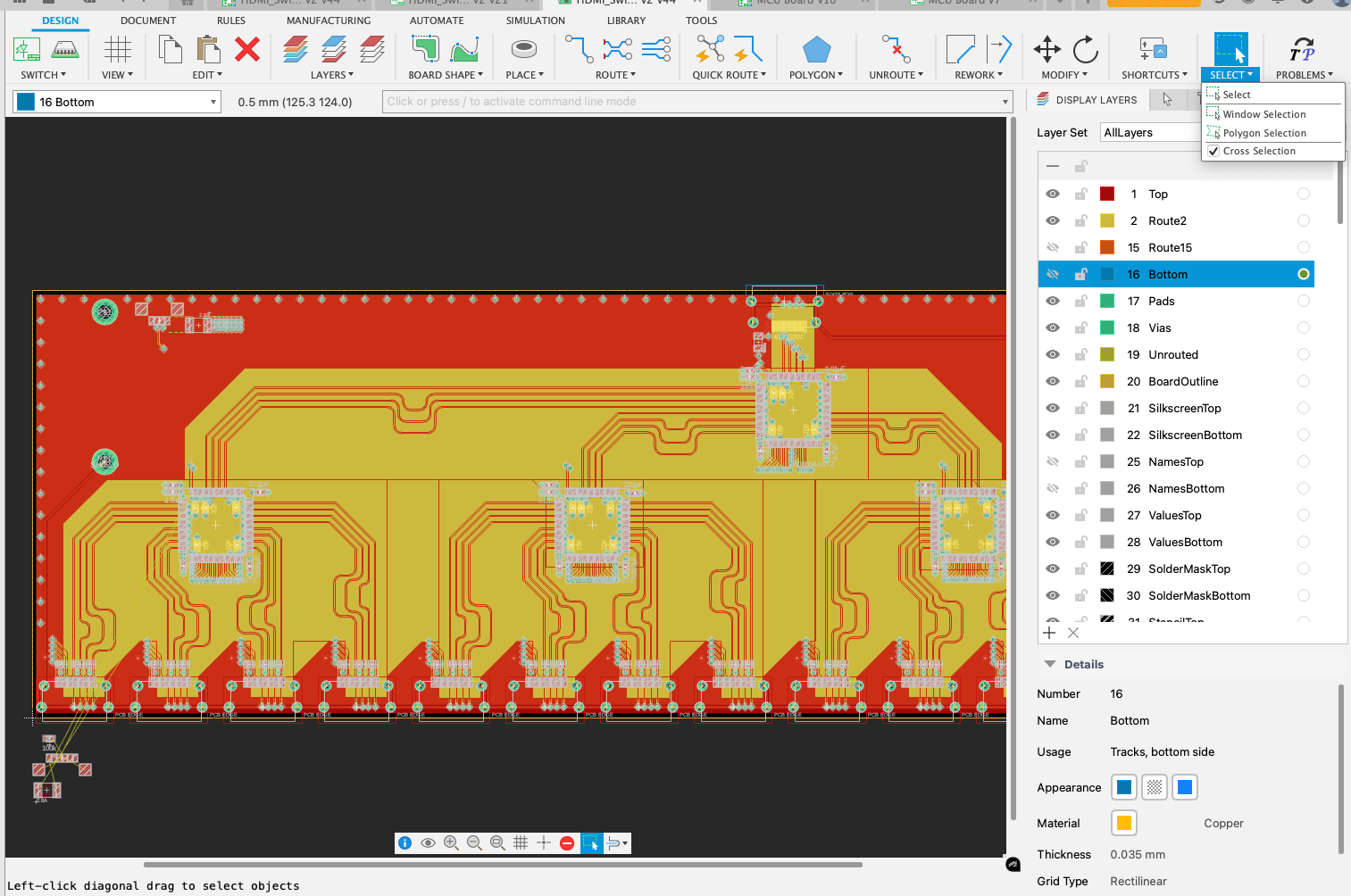
Bare metal gaming servers fail in all the usual ways, and when one hangs in the BIOS or drops off the network, you need a keyboard, a screen, and a mouse on it without driving to the building. That is what a KVM over IP is for. The problem was cost. They needed a lot of them, as backups across a lot of machines, and the established options like PiKVM and BliKVM get expensive fast when you multiply them by a rack. One KVM behind a switch that can reach dozens of machines changes the math completely.
JetKVM had run its Kickstarter at the end of 2024 and closed with nearly $6 million from about 46,000 backers. The team behind it comes from BuildJet, a Y Combinator company. I had just built KVM hardware for a real deployment, and in May 2025 I sat down and wrote out JetKVM's bill of materials: a Rockchip RV1106 SoC, a Toshiba TC358743 HDMI bridge, a small eMMC. My reaction was very specific. I could make this, and I could do it cheaper.
What JetKVM got right
In our setup-time test, the JetKVM went from box to a working remote session in under two minutes, with nothing to flash and no desktop app. Only the NanoKVM Full was smoother. That is what JetKVM got right: simplicity, at $69, in a category of expensive boxes and fiddly setups.
The BOM explains how. An RV1106 and a TC358743 are cheap, well understood parts, and they spent their effort on the software. They also went open source, which is the right call for a device that sees your screen and types your keystrokes: the people who buy these want to read the code first. I use one regularly in my homelab rack, and the gaps below come from that unit, not from a spec sheet.
The gaps people kept pointing at
When I started reading through forums, Reddit threads, and reviews, the same complaints kept coming up. Resolution, PoE, Wi-Fi, and the HDMI connector. My own list added two more: latency and how badly it fits in a rack.
The fair version of this needs a date on it, because JetKVM has improved. Here is where things stood when I started, and where they stand now:
| Gap | JetKVM at launch (late 2024) | JetKVM in 2026 | What I wanted |
|---|---|---|---|
| Resolution | 1080p60 | 1080p60 | 4K60 capture |
| PoE | No | Yes, a $119 PoE model | PoE on one cable |
| Wi-Fi | No | No | Dual-band Wi-Fi and Bluetooth |
| HDMI connector | Mini HDMI | Full-size HDMI | Full-size HDMI in and out |
| Latency (click-to-photon) | About 98 ms, measured on our bench in 2026 on an original-revision unit | The new revision is not yet measured | Under half of that |
| Rack mounting | 3D-printed and custom mounts | 3D-printed and custom mounts | Designed for the rack from the start |
| Price | $69 on Kickstarter | $103 MSRP, $129.99 on its Amazon store | Competitive, with more hardware |
Prices are from our JetKVM buying guide, checked in September 2026. So two of the original complaints, the mini HDMI port and the missing PoE, got fixed in the 2026 revision. I take that as a sign the complaints were real. The others are still true. The latency figure comes from our own click-to-photon measurement: about 98 ms on a wired LAN, which is fine for BIOS screens and noticeable for anything mouse-heavy. And rack mounting was never really the point of the product. It was designed to look good on a desk, and the rack solutions came later from the community.
For a rack like the one above, that last gap matters most: a device that can't mount cleanly or chain its network means a shelf, a tangle of cables, and one switch port per unit.
Where I was starting from
I had never built a Linux single-board computer, never designed PoE, and never touched a Rockchip part. What I did have was hardware shipping experience: six years at SpaceX on large assemblies, then senior electrical engineer at Apis Cor, a construction robotics company that 3D prints concrete buildings, where a small team means you do the PCBs, harnesses, and testing yourself. Then consulting on PCB design and prototyping for clients like Nano RC.
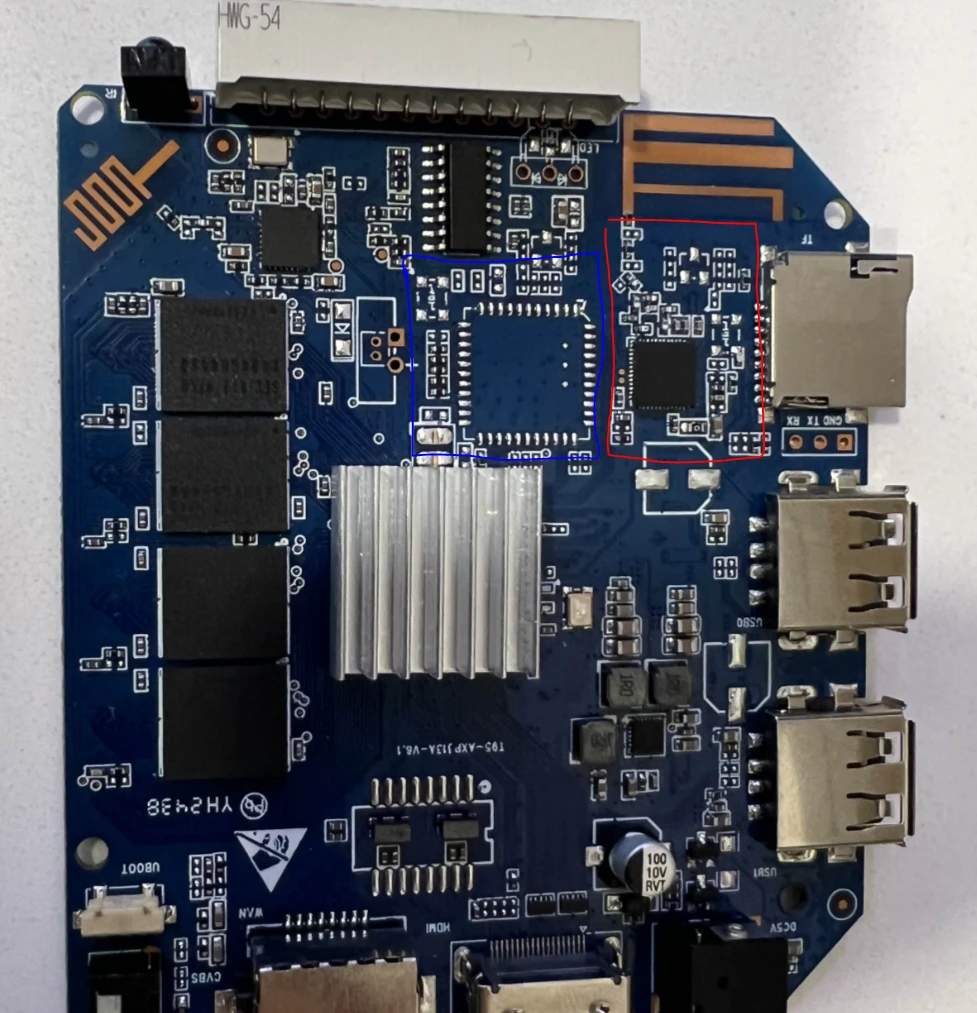
So I had shipped hardware and done high-speed HDMI and USB on microcontroller designs, but the Linux side was new. One early problem was Wi-Fi: I could not find a low-cost Wi-Fi solution that made sense, so I bought a $35 Android TV box to see how a device that cheap does it. I also used its board as a first DDR layout reference, though I did not get much out of that part.
It was also a free-time project. My plan in July 2025 was to go full time on WarpKVM by mid August. Client work had other ideas, and for most of the next year this was nights and weekends around consulting. It only became my main focus this summer. If you are reading this as a plan for your own product, count in evenings: at that rate, one wrong chip costs a season, not a month.
The requirements
I wrote the requirements down before designing anything. This is the list I eventually handed to the industrial designer:
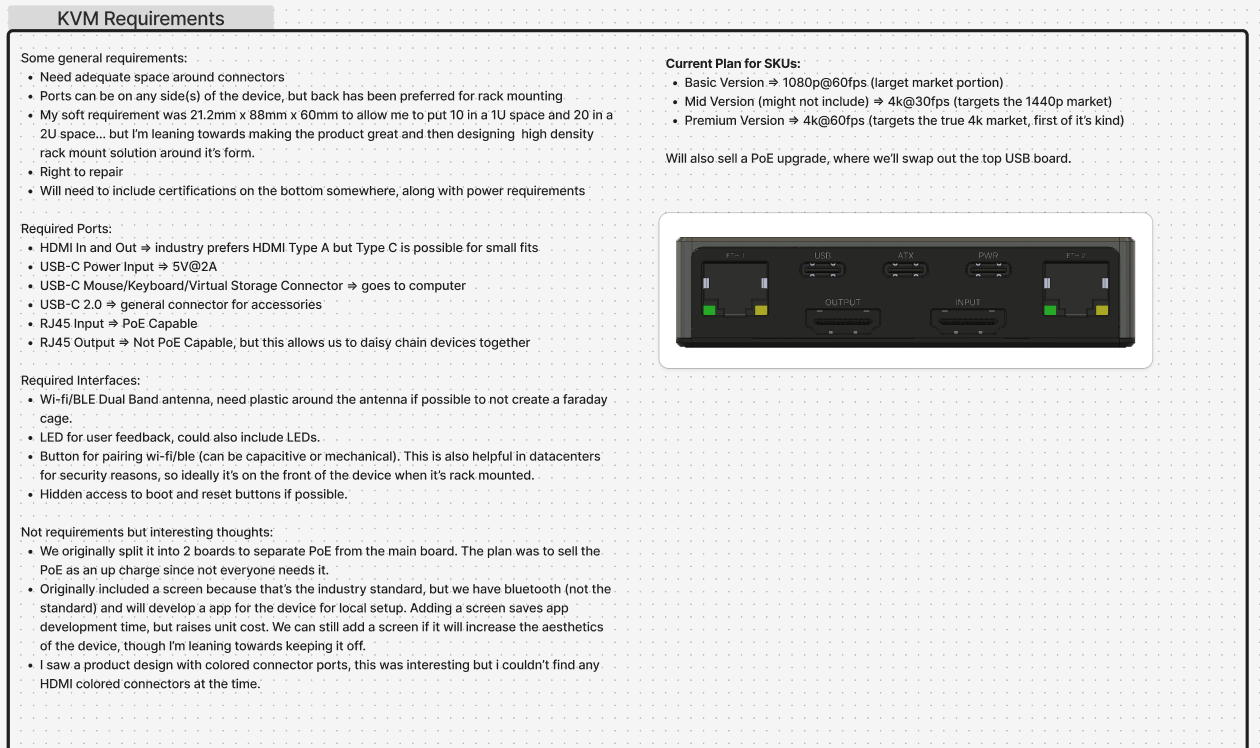
The core of it:
- PoE. One cable for power and network, which is what you want in a rack.
- Two RJ45 ports, so units can daisy chain. The input port takes PoE and the output passes network to the next unit. In a rack you run one cable to the first KVM and chain the rest, and even on a desk it saves you an Ethernet run.
- Wi-Fi and Bluetooth. Dual band, with plastic around the antenna so the enclosure does not become a Faraday cage.
- HDMI in and out, full size. The output was its own requirement. I wanted HDMI out from the SoC so the device could double as a streaming box, Moonlight style, for gaming.
- Ports on the back for rack mounting, and a pairing button on the front, because in a datacenter you want pairing to need physical access.
- Right to repair, and room for certifications and power ratings on the bottom.
- A soft size target of 21.2 x 88 x 60 mm, which fits 10 units in 1U or 20 in 2U. I was leaning toward making the product great first and designing a dense rack solution around its shape, rather than the other way around.
- Low cost. In May 2025 the pitch was a Lite model at about $59 and a Pro at about $89.
The original list also had a touchscreen, because that is what the category does. It survived until November 2025. I dropped it for cost, for manufacturing complexity (its signals were what finally broke our DRAM routing), and because it was slowing down launch. We have Bluetooth, so setup moved to a phone app. That decision gets its own post.
First designs
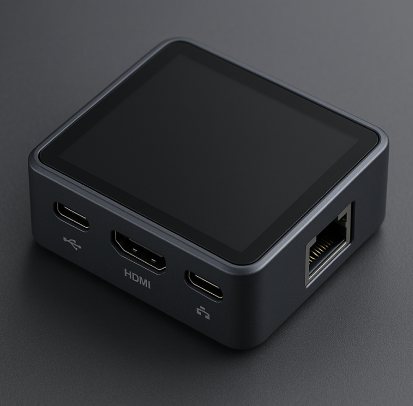
To get started quickly I used AI image generation to rough out a few concepts. These are not designs anyone engineered, just a starting point for what the thing might look like:
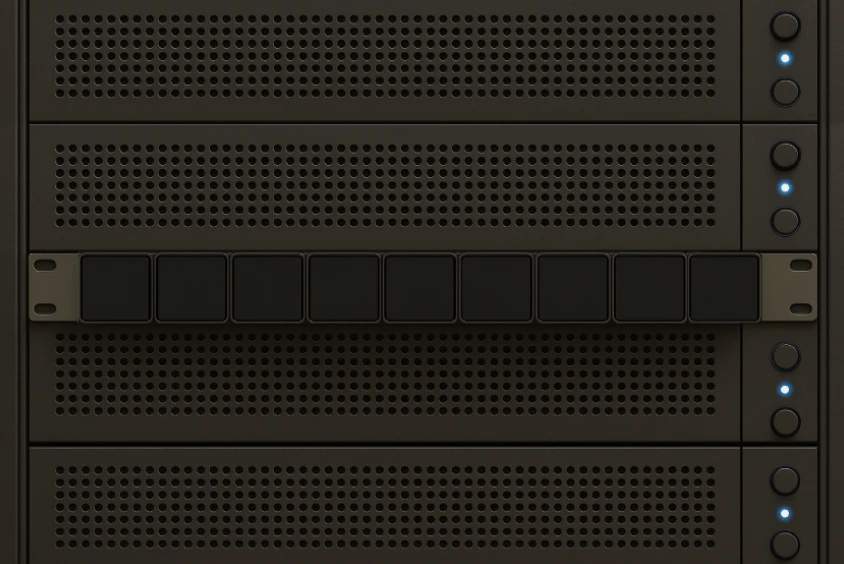
Then I moved into CAD. The first real version was a small square box with a screen on top, meant to sit on a desk stand and come off it for rack mounting. The rack version was a 2U panel full of them, daisy chained:
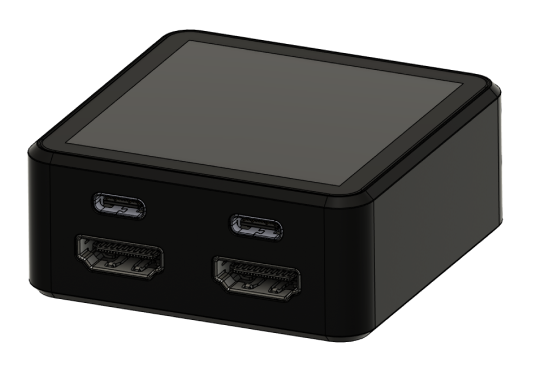
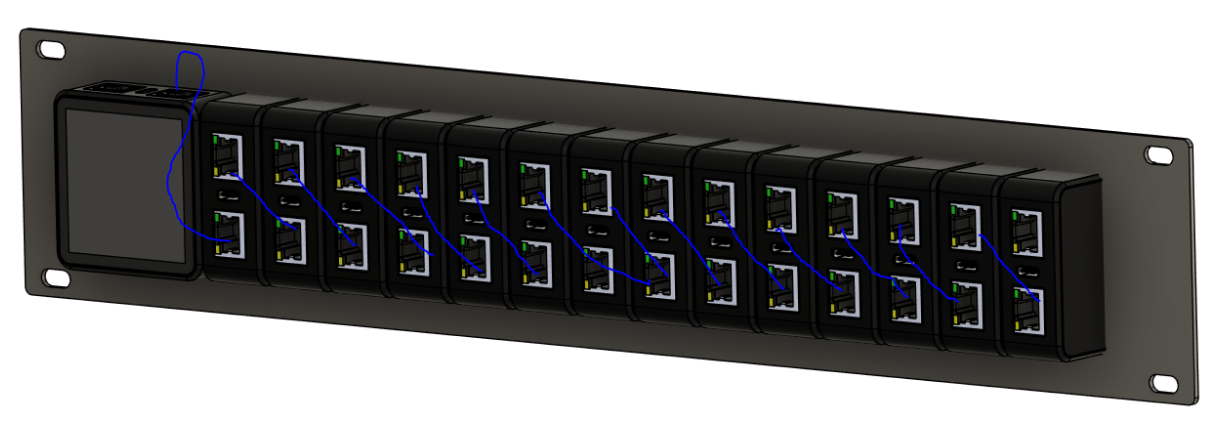
Funny enough, that first enclosure looks a lot like the PicoKVM that Luckfox announced in September 2025. I will take that as convergent design rather than anything else.
Five months on the wrong chip
The electronics started on Allwinner, and that is where most of the naive thinking lived.
The first pick was the Allwinner T507. Three days after I ordered dev boards, I found out it has no HDMI output, which the passthrough requirement needs. So I moved to the Allwinner A527, which added dual Gigabit Ethernet, and based the design on the Radxa Cubie A5E because its schematic is open and the board is cheap. Then the Cubies sat in customs for about five weeks, and we kept designing without hardware in hand.
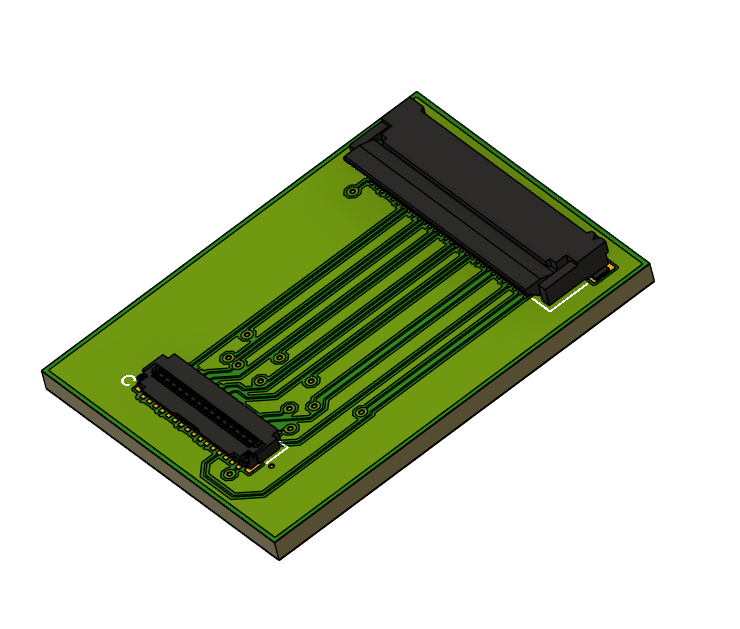
When the boards finally arrived in July, the plan was to wire the Rockchip RK628D HDMI-to-CSI bridge into the Cubie with a small adapter board and prove the video path. The first adapter had its connector flipped, which would have put pin 1 at the wrong end of the cable. I caught it by checking the pinout before power-on, so nothing fried, and reordered.
Meanwhile the design itself moved fast. By August 2025 the A527 board was a two-board stack, main board on top and an Ethernet and PoE board below:
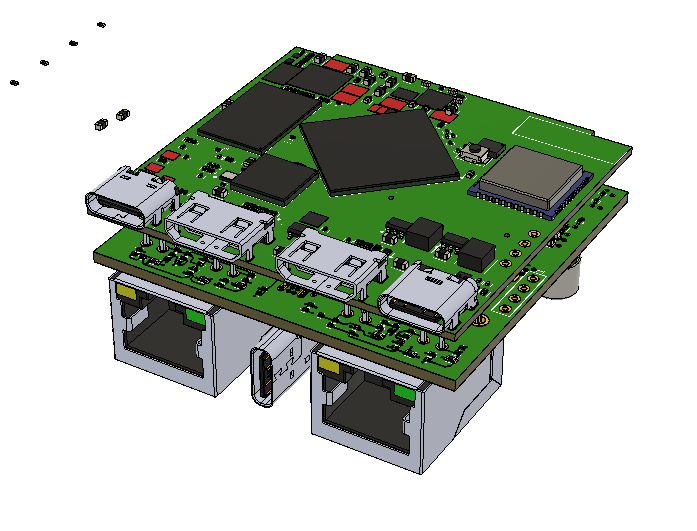
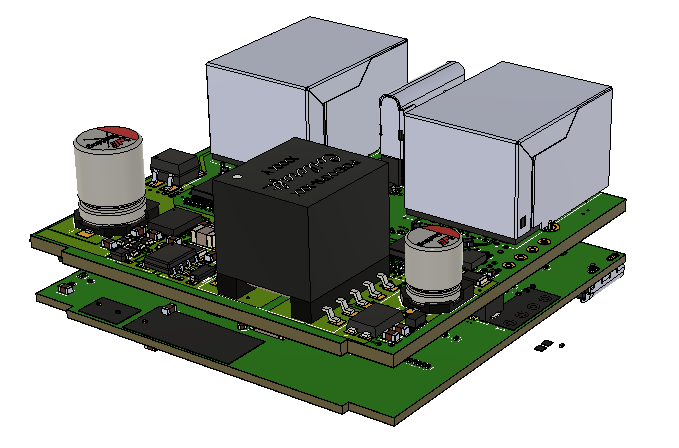
On the bench supply's readout, the Cubie settled around 0.6 A and peaked at 1.3 A during boot, at 5 V. That is roughly 6.5 W at worst, well inside the 12.95 W standard PoE delivers at the device, so PoE+ was overkill and the design moved to a smaller standard PoE controller. That number came from a bare dev board, not the finished product, so it only settled the question for that design. PoE still lives on its own stacked board today, with a different controller sized for 2.5 A at 5 V, and how that board's budget was worked out is its own post.
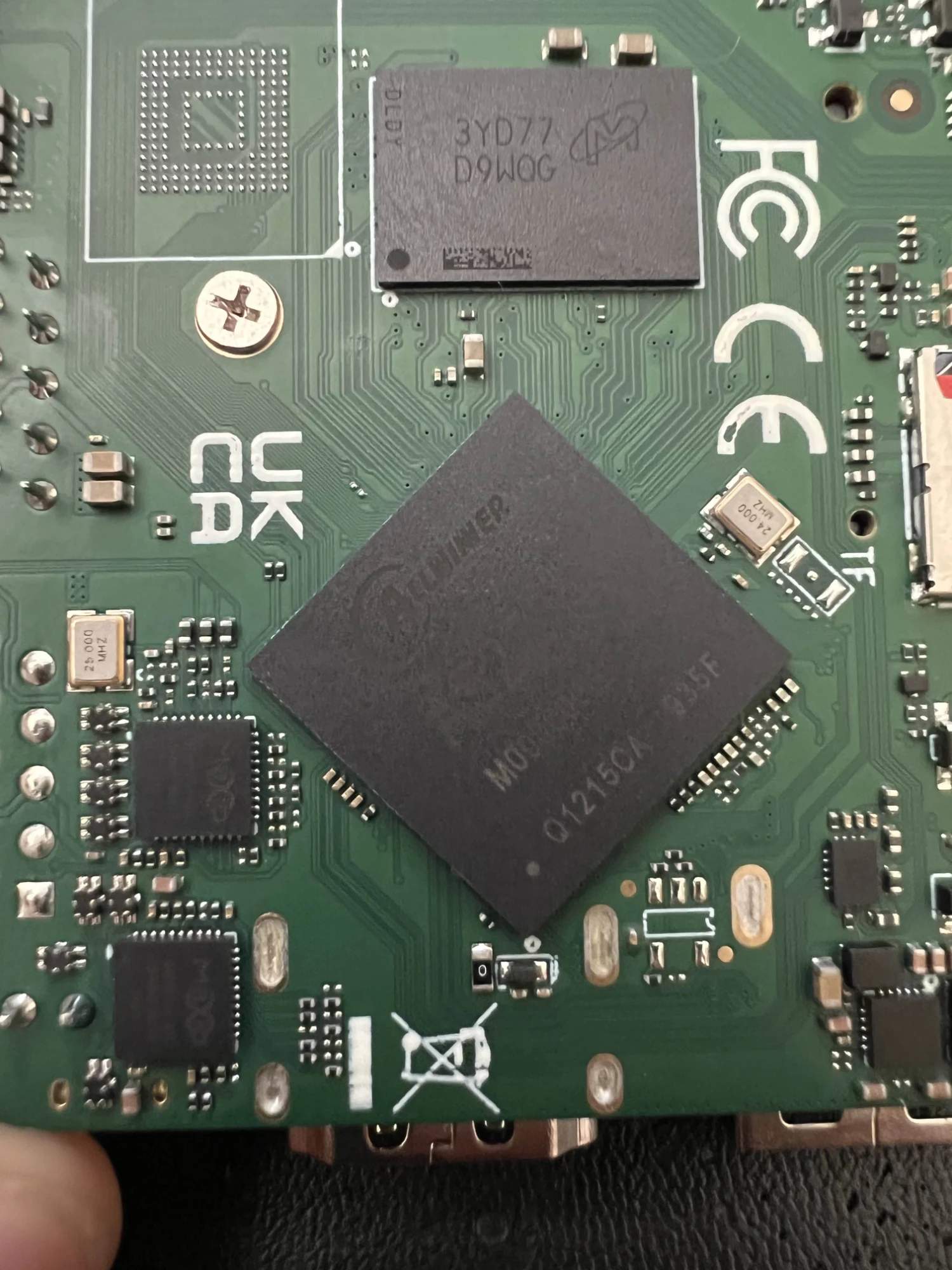
But the video never worked. By September 2025 the RK628D had never shown a single frame on the A527. Looking back, I honestly do not know whether it was the adapter, the firmware, or both, and I never found out. What I did know was that the Cubie's software support was thin, and it was not even clear the A527's camera lanes could take 4K. The RK628D, on the other hand, is supported natively on Rockchip's own SoCs.
So in late October 2025 I switched to the Rockchip RK3576, and left behind a fully routed A527 board that was never ordered. The first Rockchip dev board arrived on November 4. The RK628D captured video that same night.
The lesson is simple and I should have known it already: prove the whole signal path on existing hardware before you design your own. The A527 schematics and layout were months of free time spent on a chip that could not do the one thing the product needs.
Where I was naive
$59 and $89. That was the pricing plan in May 2025, and it was naive before memory prices ever moved. A retail price has to carry a lot more than the parts: shipping, assembly labor, the cut every sales channel takes (Kickstarter, Amazon and Crowd Supply all take one), and tariffs. Tariffs went wild in 2025: US tariffs on Chinese goods hit 145% in April before dropping to 30% in May, while I was ordering boards from China. By October the base model target had drifted to about $99, and I was writing that $99.99 might "just barely" work. Then memory prices went vertical. At the end of November I noted RAM had gone up three to four times in two months. AI data centers pulled DRAM and flash supply toward servers, and DRAM contract prices were up 90 to 95% quarter over quarter by February 2026. A KVM carries RAM and flash storage, so an enclosed 1080p unit with PoE and Wi-Fi under $100 stopped being realistic.
Two things came out of that. First, while looking at the market I noticed a real gap: nobody was shipping an affordable KVM that captures a full 4K at 60 fps. The closest on our bench, tested the same way as everything else, were the NanoKVM Pro at roughly 4K45 and the GL.iNet Comet Pro at 4K30. That became the WarpKVM 01, built around 4K60 capture. Its first prototype board arrives next week, and I will publish its latency once it has been through the same OSLTT rig that measured the JetKVM at 98 ms, not before. JetKVM will stay the smaller device, and that is fine. The 01 is a different product for a different buyer.
Second, I still wanted something under $100, so we built a DIY WarpKVM: a bare board kit for $99. How its streaming compares is its own post, once the measurements are done on every display we test with.
I was also naive about competition. In August 2025, while we were routing DDR on the A527 board, GL.iNet launched the Comet Pro on Kickstarter. It finished at just over $1 million from 5,671 backers. My note at the time was that it "honestly validates the product even more for us." That was true. It was also a reminder that I was not the only one who had noticed the gap.
The other naive part surprised me more. Building the KVM was honestly the easy part. Once we were on Rockchip, getting it to stream was not hard. What turned out to be a different beast entirely was everything around it: finding users, marketing, firmware, working with industrial designers, talking to manufacturers, planning a crowdfunding campaign. By this summer most of my time was going to that work rather than the boards. I came in thinking the hardware was the hard problem. It was the part I already knew how to do.
If you are thinking about building one
If you look at a product and see a gap, the gap is usually real. Mine were, and two of them got fixed by the company itself, which is about as clear a confirmation as you get.
And the fact that something already exists is not a reason not to build it. A lot of people look at a product like JetKVM and decide there is no point making another one. I think that gets it backwards. A crowded market is one where people have already shown they will pay. JetKVM itself walked into a category PiKVM and TinyPilot already had, and GL.iNet's Comet Pro raised a million dollars after JetKVM had shipped. What matters is that you are different in a way a specific buyer cares about. For me that buyer is anyone with a rack.
But the gap is the small part. My $59 target is a $99 kit sixteen months later, my first chip never streamed a frame, and the business side now takes more of my week than the hardware does. Prove the signal path on a dev board before you draw a schematic, price your memory as if it will double, and assume the non-engineering work is at least half the job. I still think we can beat them. It just takes more than a better board.
Next up is the first real engineering decision in detail: picking the SoC, including the three chips after the RK3576 that this post skipped.